
By Aderogba George
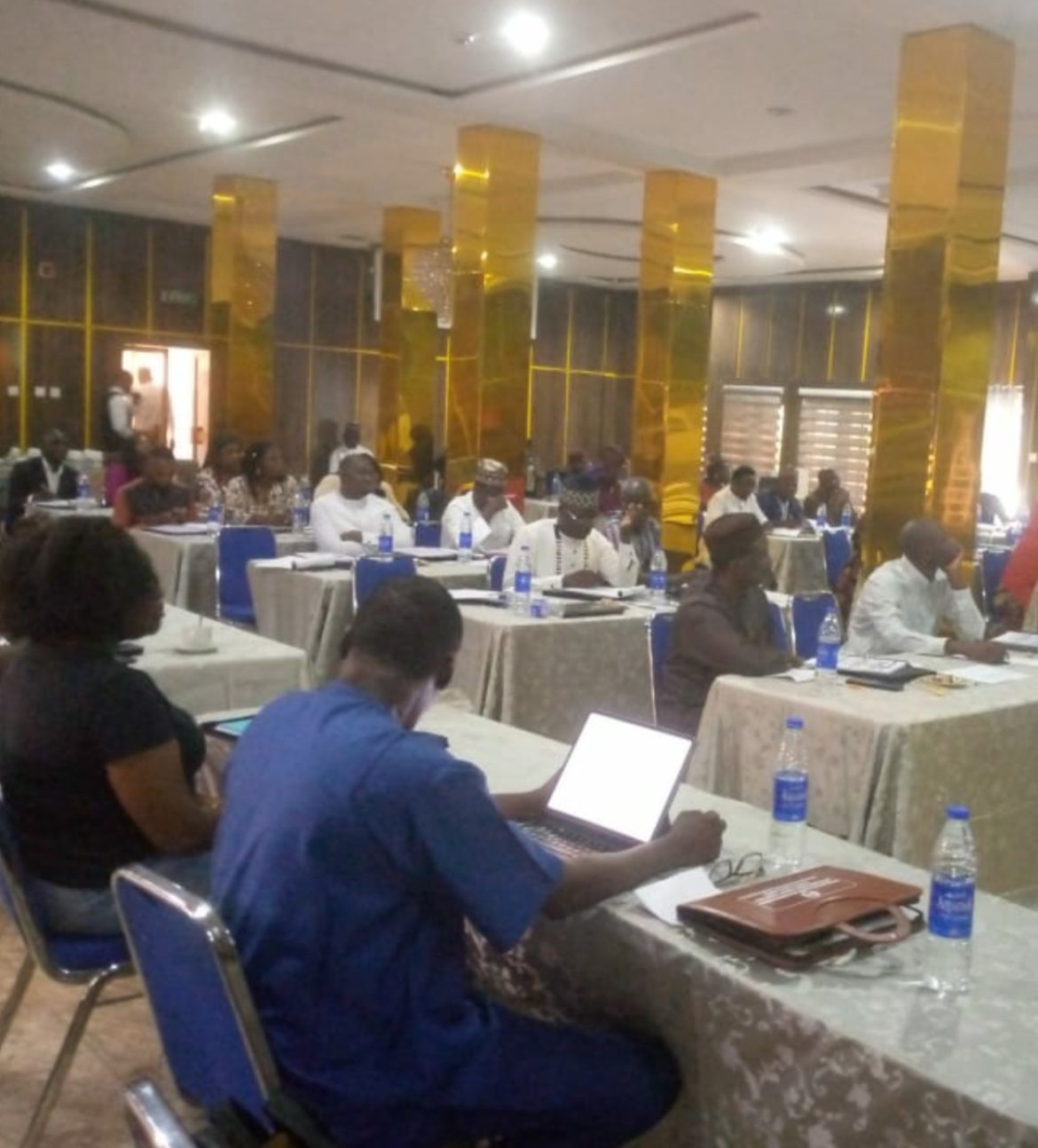
Stakeholders across key economic sectors from four North-Central states on Thursday in Abuja commenced a two-day workshop to examine Nigeria’s poverty index and explore its application in budgeting, policy formulation and economic planning.
The workshop, organised by the Federal Ministry of Budget and Economic Planning in collaboration with Pinches Multi-Services Limited, attracted participants from Benue, Nasarawa, Plateau and the FCT, including statisticians, budget officers, development planners and academics.
The News Agency of Nigeria (NAN) reports that the workshop is themed: “Using the Multidimensional Poverty Index (MPI) for policy, planning and budget action in Nigeria, with special emphasis on North-Central Nigeria.”
Speaking at the opening, Mr Oluwafemi Sadibo, Principal Consultant of Pinches Multi-Services Limited and convener of the workshop, said the initiative was designed to deepen stakeholders’ understanding of poverty measurement beyond income-based metrics.
He noted that findings from various national and international surveys had consistently shown that poverty in Nigeria remained widespread and multidimensional in nature.
According to him, a clearer understanding of the poverty index, especially the Multidimensional Poverty Index (MPI), will enable governments at all levels to make more informed decisions on resource allocation and development priorities.
Sadibo explained that the MPI captures deprivations across critical sectors such as health, education and living standards, thereby providing a more holistic picture of poverty.
“Understanding the poverty index will guide better budget allocation and ensure that resources are directed to areas of greatest need.
“When resources are allocated equitably and efficiently, it will ultimately contribute to reducing poverty levels across the country,” he said.
He added that the workshop would also serve as a platform for knowledge sharing among participants from different states, with the aim of strengthening institutional capacity for data-driven planning.
Sadibo said participants were expected to cascade the knowledge gained to relevant stakeholders and communities, thereby improving public awareness and fostering collective responsibility in tackling poverty.
“At the end of this programme, participants are expected to disseminate this knowledge within their various states and institutions.
“This will help citizens understand that while poverty exists, it can be addressed through informed policies, strategic planning and collective action.
“We have also brought in professors and experts from the academic community to provide evidence-based insights that will enrich discussions and policy direction,” he said.
He called on the Federal Government to sustain and scale up similar initiatives across other regions of the country, noting that increased awareness and effective use of statistical data would enhance national efforts at poverty reduction.
Also speaking, Prof. Isa Muhammad of the Department of Economics, University of Abuja, said that about 83 million Nigerians were classified as multidimensionally poor, according to the 2022 MPI report.
He described the figure as significant and indicative of the urgent need for targeted interventions.
Muhammad identified living standards as a dominant factor driving poverty disparities across states, noting that issues such as inadequate housing, lack of access to clean water and electricity, poor sanitation, and limited access to healthcare contributed significantly to multidimensional poverty.
He also highlighted other contributing factors, including low levels of education, infrastructural deficits, food insecurity and unemployment.
“Eighty-three million Nigerians within the poverty index is a significant number as far as the country is concerned.
“This workshop is timely because it brings together planning officers and statisticians who are directly involved in economic decision-making.
“The expectation is that participants will take these insights back to their respective states and integrate them into development planning processes to reduce poverty,” he said.
Muhammad emphasised the need for evidence-based policymaking, stressing that accurate data and proper interpretation of poverty indicators were critical to designing effective interventions.
In his remarks, Prof. Peter Siyan, also of the Department of Economics, University of Abuja, said the workshop was aimed at shedding more light on the concept and drivers of multidimensional poverty.
He explained that poverty should not be viewed solely from the perspective of income or consumption, but rather as a condition characterised by multiple deprivations affecting individuals’ quality of life.
“The whole conversation is about the MPI, which tells us that poverty is measured using several indicators, not just income.
“A person may earn income but still be considered poor if they live in an environment without basic amenities such as electricity, clean water and sanitation.
“That is why it is important to identify these deprivations and address them holistically,” he said.
Siyan further stressed that tackling poverty required coordinated efforts across sectors, including improvements in education, healthcare, infrastructure, employment generation and security.
He noted that without addressing these underlying factors, efforts to reduce poverty would yield limited results.
Participants at the workshop are expected to engage in technical sessions, data analysis and policy discussions aimed at strengthening the use of the MPI as a tool for inclusive development planning in Nigeria. (NAN)


