As Maj.-Gen. Koughna Moves to Institutionalise Specialised Training within 8 Division
Military victories are rarely won by firepower alone. They are achieved through the effective combination of strategy, leadership, technology and, above all, highly trained personnel.
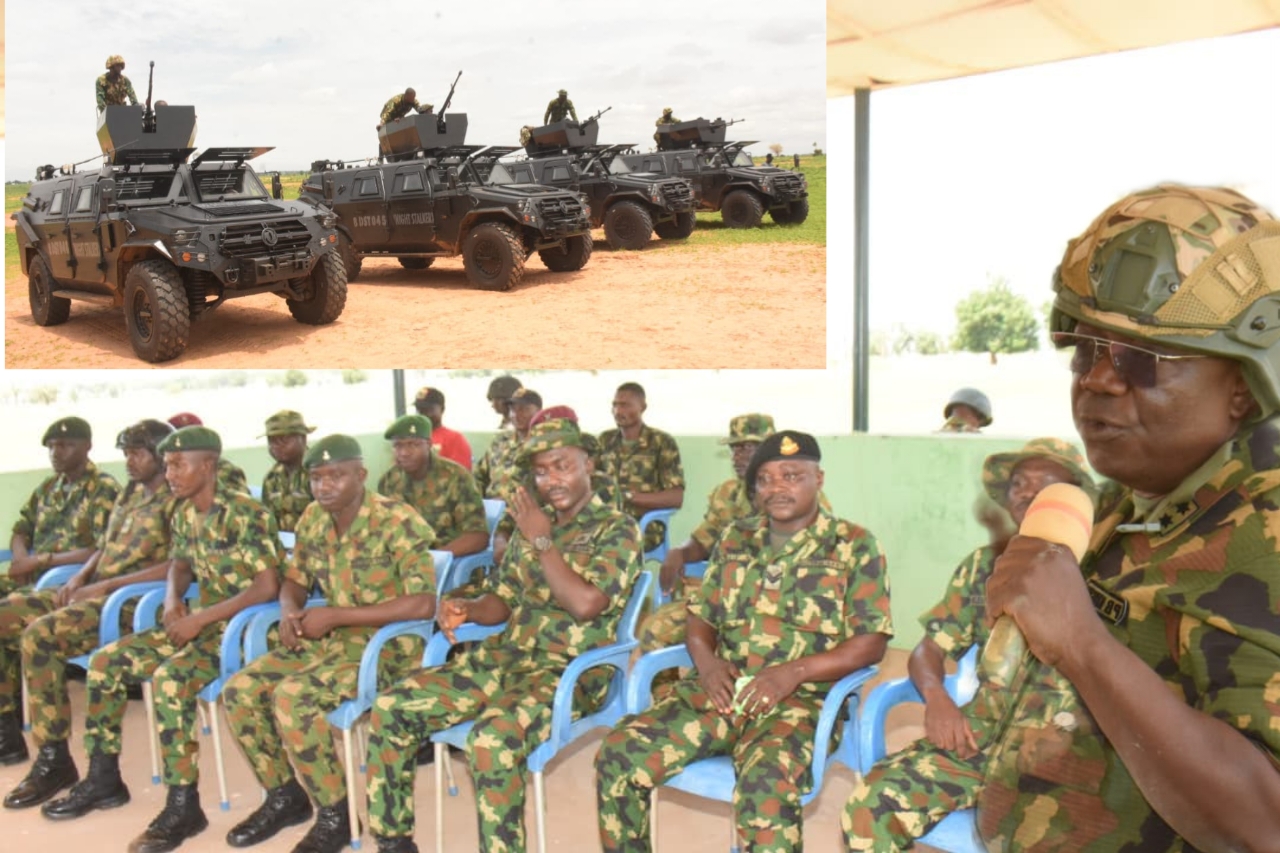
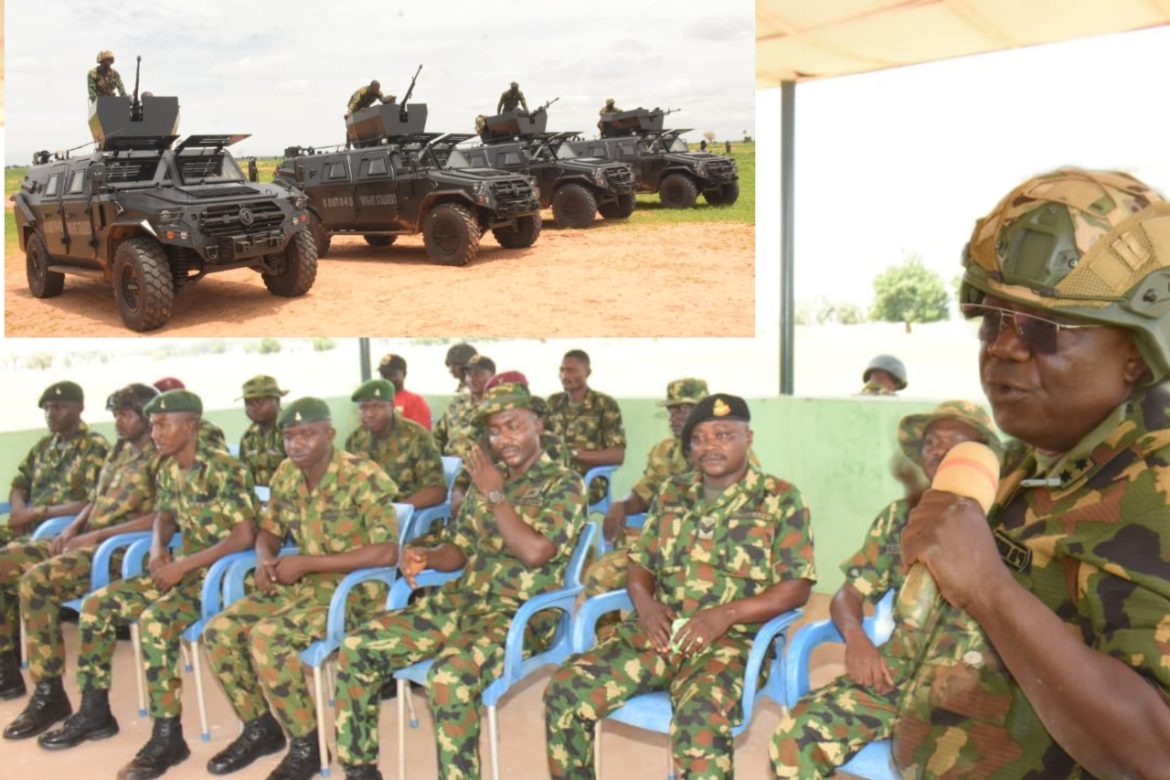
This reality was reinforced recently when the 8 Division, Nigerian Army, graduated its pioneer batch of 17 Armoured Combat Support Vehicle (CSK) Crew Men—an achievement whose significance extends well beyond military circles.
At first glance, the graduation of 17 specialised crew men may appear to be another routine military exercise.
In reality, it represents a strategic investment in operational capability at a time when Nigeria continues to grapple with terrorism, banditry and other violent crimes, particularly in the North-West.
Modern warfare demands far more than brave soldiers. It requires personnel with specialised skills who can effectively operate increasingly sophisticated combat platforms under the most demanding battlefield conditions.
An armoured combat vehicle is only as effective as the crew entrusted with operating it. Without competent operators, even the most advanced military hardware cannot deliver its full combat potential.
The initiative championed by the General Officer Commanding (GOC) 8 Division and Commander, Sector 2, Operation FANSAN YAMMA, Maj.-Gen. Bemgba Paul Koughna, reflects a forward-looking approach to military leadership.
Rather than focusing solely on acquiring modern equipment, the Division has recognised that sustained investment in human capital remains one of the strongest pillars of operational effectiveness.
Maj.-Gen. Koughna aptly captured this philosophy when he observed that “anybody can fire a gun, but effectively engaging the enemy requires a crew man who can position the gunner for maximum advantage.”
His remark underscores a timeless military principle: superior tactics often outweigh superior firepower. Success on the battlefield depends on mobility, positioning, coordination, precision and sound judgment—qualities developed through rigorous training and constant practice.
Equally commendable is the GOC’s decision to institutionalise specialised training within the Division. Across the world’s leading militaries, continuous in-house training has become an indispensable complement to formal military education.
By creating a system where experienced personnel continuously transfer knowledge and practical skills to others, the 8 Division is strengthening institutional memory while building a sustainable pool of specialised expertise.
The training curriculum undertaken by the pioneer crew men reflects this commitment to excellence. Covering military vehicle systems, tactical driving, combat recovery, force protection and battlefield manoeuvre, the programme goes far beyond teaching soldiers how to operate armoured vehicles.
It prepares them to function effectively under combat conditions where technical competence, teamwork and rapid decision-making can determine the difference between mission success and failure.
Another notable aspect of the initiative is the introduction of a special monthly allowance for qualified crew men. Recognising specialised competencies through appropriate incentives is more than a welfare measure; it is a strategic investment in professionalism.
Such incentives encourage continuous self-improvement, improve morale, enhance retention of skilled personnel and reinforce a culture of excellence across the force.
As the Nigerian Army continues to modernise its capabilities, equal emphasis must be placed on developing the men and women who operate increasingly sophisticated platforms.
Advanced armoured vehicles, surveillance technologies and modern weapon systems can only achieve their intended purpose when matched with well-trained, disciplined and motivated personnel.
The graduation of these 17 pioneer CSK Crew Men should therefore be viewed not merely as the conclusion of a training programme but as a model for capability development across the Nigerian Army.
It reinforces an enduring military truth: investment in people remains the most valuable and sustainable investment any armed force can make.
Nigeria’s security environment remains fluid and increasingly complex. Responding effectively requires innovation, adaptability and an unwavering commitment to professional excellence.
Initiatives such as this demonstrate that the Nigerian Army is not only preparing for today’s operational challenges but is also building the institutional capacity required to confront tomorrow’s evolving threats.
Ultimately, military readiness is measured not simply by the number of troops deployed or the quantity of equipment acquired, but by the competence, discipline and professionalism of those entrusted with defending the nation.
By graduating its pioneer CSK Crew Men and moving to institutionalise specialised training, the 8 Division has taken another important step towards building a more agile, resilient and mission-ready force capable of strengthening Nigeria’s long-term security