By Genesis Ogiri
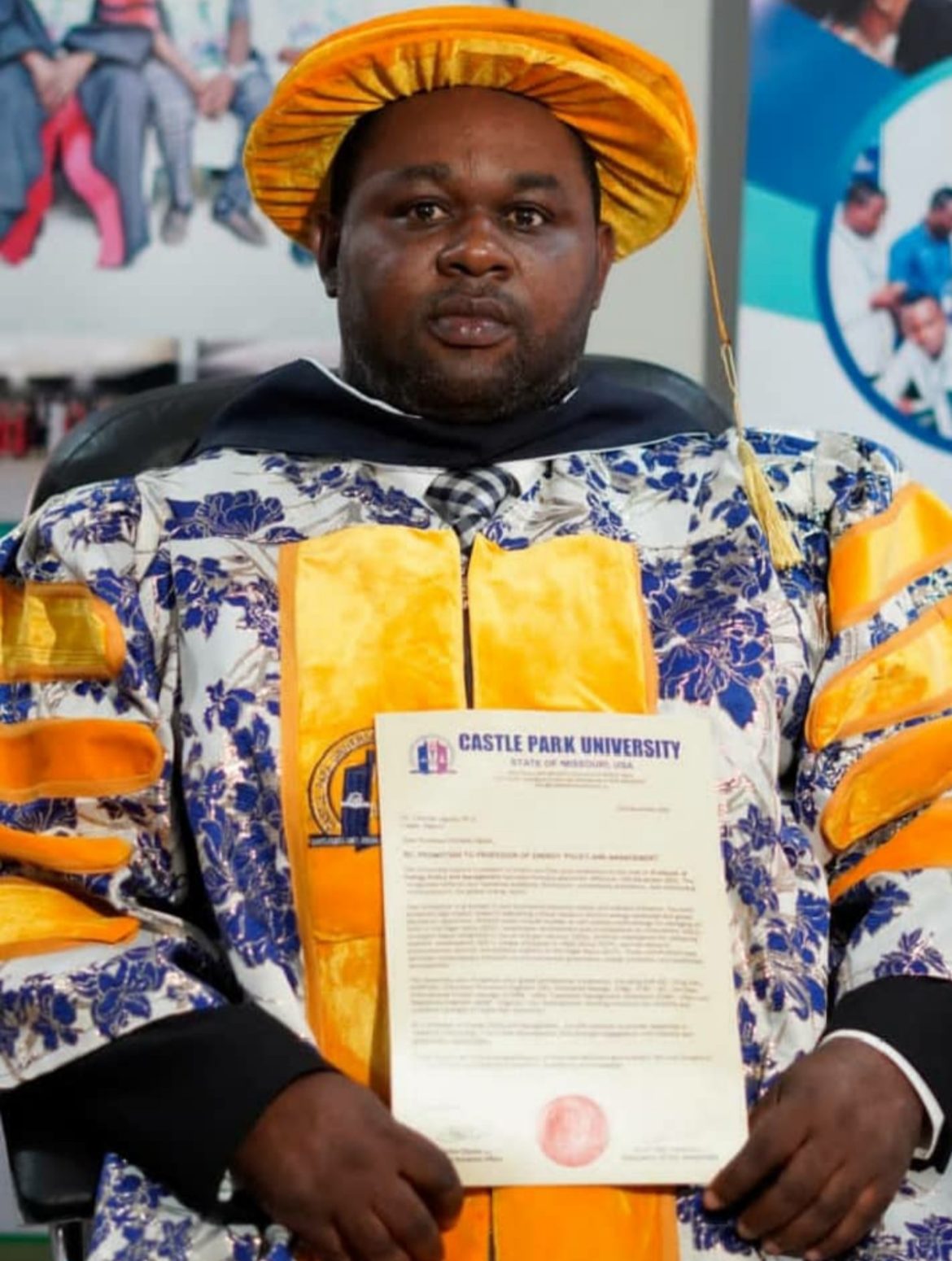
In a milestone for global energy scholarship, the governing council of Castle Park University, USA, has formally conferred the rank of Professor of Energy Policy and Management on Dr. Chinedu Ogwus, Ph.D, effective December 13, 2025. The promotion highlights his sustained academic distinction, transformative contributions to energy governance, sustainable development, and policy innovation, and underscores the University’s commitment to nurturing scholars whose work shapes national and international energy discourse.
The University emphasized that Prof. Ogwus’ elevation represents both individual achievement and institutional distinction, reinforcing its commitment to research excellence, policy-oriented education, and sustainable energy solutions, and further cementing its status as a hub of transformative scholarship and global energy leadership.
Prior to this appointment, Dr. Ogwus served as Regional Director, Africa (Robotics and Autonomous Systems – RAS), Society of Petroleum Engineers International (SPEi), where he demonstrated visionary leadership in integrating cutting-edge technology, policy frameworks, and sustainable practices across Africa’s energy landscape. His tenure in this role reinforced his reputation as a scholar-practitioner capable of translating research into impactful energy solutions.
Prof. Hart Jones, Ph.D, President of Castle Park University, described the promotion as a strategic endorsement of the University’s mission to advance world-class scholarship that is both academically rigorous and socially relevant.
“Professor Chinedu Ogwus exemplifies the calibre of scholar we seek to develop one whose research transcends theoretical frameworks and actively shapes energy policy, industrial practice, and sustainable development outcomes,” Prof. Jones stated.
He further emphasized the global significance of Prof. Ogwus’ professional credentials.
“Beyond academia, Professor Ogwus brings formidable international recognitions, including EUR ING, Chartered Engineer (UK), International Development Engineer (UK), Chartered Petroleum Engineer (UK), Chartered Management Consultant (USA), Chartered Manager and Fellow of the Chartered Management Institute (UK), Certified International Project Manager (USA), and Registered engineer with COREN . This rare convergence of scholarship, industry expertise, and policy acumen strengthens our global visibility and academic prestige,” Prof. Jones added.
Supporting the President’s remarks, John Stone, Head of Academic Affairs, highlighted that the promotion followed a rigorous, multi-tiered evaluation of Prof. Ogwus’ scholarly output, professional achievements, and policy impact.
“The elevation to Professor of Energy Policy and Management acknowledges his sustained intellectual distinction and transformative contributions to energy research and policy. His work on environmental governance, energy transition, and sustainable leadership in the oil and gas sector aligns seamlessly with Castle Park University’s mission to advance knowledge that is both academically rigorous and socially relevant,” Stone remarked.
In his acceptance remarks, Professor Chinedu Ogwus expressed deep gratitude to Castle Park University and reaffirmed his commitment to advancing energy scholarship and policy.
“I am deeply honoured by this promotion. Energy is more than a technical discipline it is central to human progress, economic growth, and environmental sustainability. I pledge to continue innovating in research, mentoring emerging leaders, and engaging with policymakers and communities to ensure energy policies are sustainable, inclusive, and people-centred. This recognition is not merely a personal milestone, but a reaffirmation that knowledge must always serve humanity,” Prof. Ogwus stated.
Prof. Ogwus’ research has been particularly influential in Africa’s energy sector, addressing oil spill management in the Niger Delta, sustainable development strategies for international oil corporations, pipeline security, biogas utilization in West Africa, and the nexus between environmental security and political stability. His work continues to inform global discussions on energy policy, governance, and sustainable development practices.