By Justina Auta/ Folasade Akpan, News Agency of Nigeria, Abuja
Stakeholders have renewed calls for increased funding for Non-Communicable Diseases (NCDs) and the full integration of essential services into Universal Health Coverage (UHC) to improve care for millions of affected Nigerians.
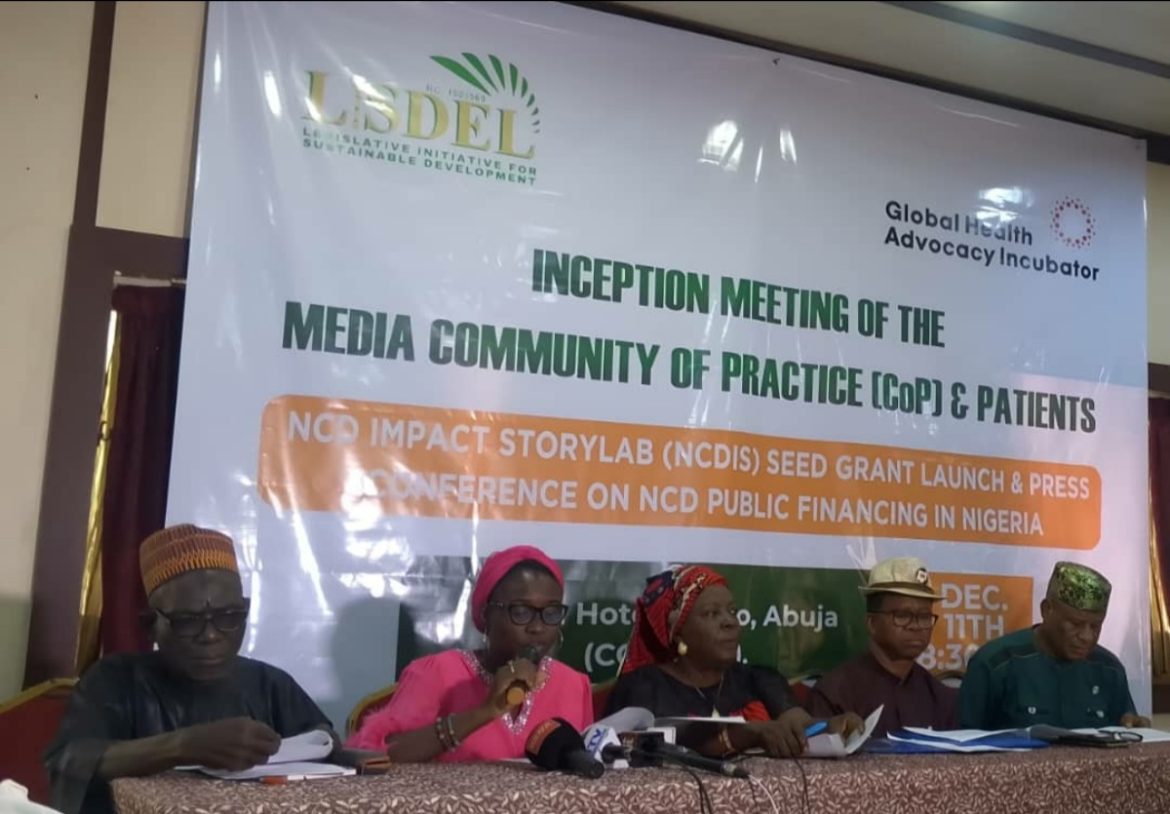
The call was made on Thursday in Abuja at the inception meeting of the Media Community of Practice (CoP) and its partners.
The event also featured the NCD Impact Story Lab (NCDIS) Seed Grant Launch and a Press Conference on NCD Public Financing in Nigeria.
The event was organised by the Legislative Initiative for Sustainable Development (LISDEL), with support from the Global Health Advocacy Incubator (GHAI).
Dr Ndaeyo Iwot, General Secretary of the Health Sector Reform Coalition in Nigeria, highlighted the poor funding for NCDs, noting that only six per cent of the health budget was allocated to those conditions.
“We are looking at UHC, and we realise that some diseases are being neglected or not properly financed, even though they are very common in society.
“The government’s financing has been very poor.
“Only six per cent of the health budget is related to NCDs, yet the burden of hypertension, diabetes, sickle cell anemia, and cancer is enormous,” he said.
Dr Chi-Kadibia Ukoma, Vice President of the Nigeria Cancer Society, emphasised that increased budget allocation would address challenges affecting patients and improve access to healthcare services.
He described cancer as one of the major NCDs in Nigeria, urging timely and adequate release of funds to tackle it and other NCDs.
Ukoma also called on the media to amplify NCD issues, hold policymakers accountable, and ensure the implementation of reforms and policies.
He encouraged NCD patients and their families to speak out, advocate for change, and actively participate in shaping healthcare policies.
Mr Victor Eyinla, Media and Communication Specialist at LISDEL, said the group was a patient-led advocacy organisation seeking government intervention.
“They need to be taken care of, and that is why we are here today.
“We are advocating for the government to listen to the voices of patients to reduce the burden of NCDs in Nigeria,” he said.
Dr Muyi Aina, Executive Director of the National Primary Health Care Development Agency (NPHCDA), stressed the need to strengthen Nigeria’s response to NCDs.
“As we continue to confront the rising burden of hypertension and other NCDs, sustainable financing, strong accountability mechanisms, and effective public communication are essential pillars for progress,” he said.
Represented by Dr Mark-Anthony Okoh of the NCD Unit, Aina hailed the inauguration of the NCD Media Community of Practice (CoP) and the introduction of the NCD Impact Story Lab Seed Grant.
He noted that those initiatives would equip journalists with the tools, evidence, and professional networks needed to drive accurate and impactful reporting on NCD financing.
“A stronger media voice means stronger public awareness, better-informed policy dialogue, and increased accountability for health investments,” he added.
Other activities marking the day included the unveiling of the annual NCDIS Seed Grant, aimed at encouraging journalists to highlight NCD issues.
The event also featured plenary sessions on the APH-FiP project and discussions on NCD financing and policy in Nigeria.
Additionally, the formalisation of the Media Community of Practice (CoP) took place, including the ratification of its Terms of Reference. (NAN)