By Franca Ofili
Dr Bartholomew Ochonye, Chief Executive Officer of Heartland Alliance Limited by Guarantee (HALG), an NGO says the organisation has vaccinated more than 2.9 million children against polio in Katsina State.
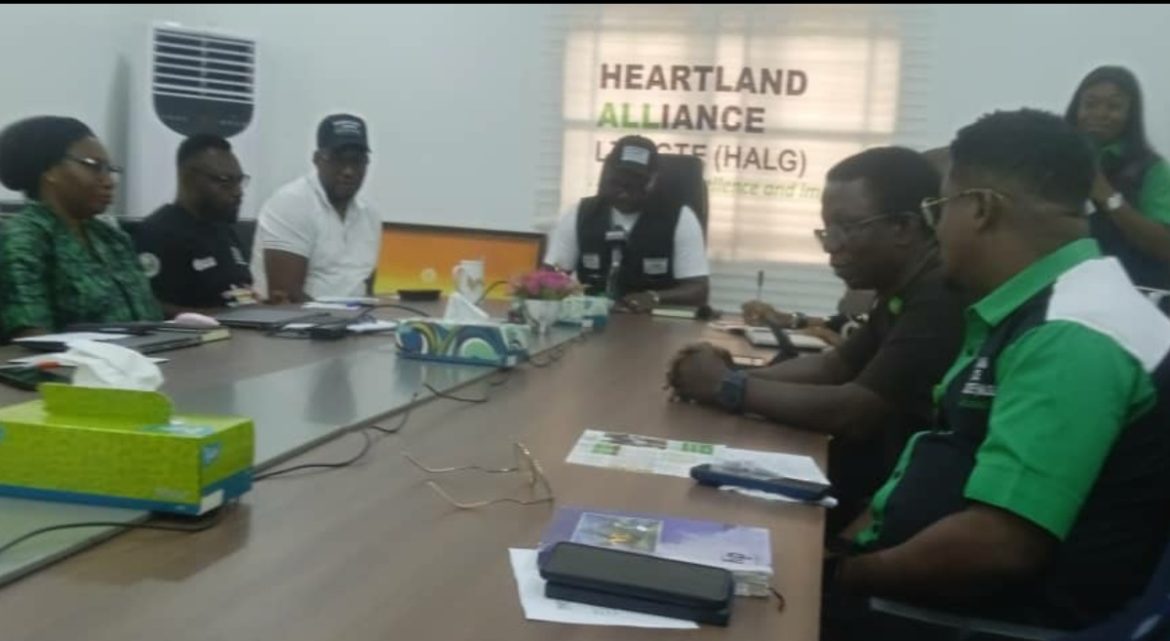
Ochonye disclosed this on Friday in Abuja during a news conference to mark World Immunisation Week 2026, highlighting progress in immunisation coverage across the state.
He said a total of 2,842,434 children were vaccinated out of 2,944,391 targeted, representing about 99 per cent coverage across 19,000 settlements in 361 wards and 34 local government areas.
“HALG today marks World Immunisation Week 2026 by highlighting a significant milestone in Katsina State.
“The March polio vaccination campaign reached more than 2.9 million children,” he said.
He added that Katsina State had recorded 11 consecutive months without a new case of circulating vaccine-derived poliovirus type 2 (cVDPV2), describing it as a major public health achievement.
Ochonye, however, cited global gaps in immunisation, noting that the World Health Organisation (WHO) reported nearly 20 million children missed at least one vaccine dose in 2024.
He said more than 14 million children globally received no vaccines at all, emphasising that many of those unvaccinated children were in underserved communities in northern Nigeria.
“Eleven months without a new polio case in a state that was once among Nigeria’s highest-risk geographies is real progress.
“But the poliovirus needs only one missed child to persist.
“That is why finding, counting and planning for every child is not preparation for the real work. It is the real work,” he added.
He said that insecurity prevented access to 54 settlements in Danmusa Local Government Area (LGA) during Phase One of the campaign, affecting full coverage efforts.
Ochonye also said vaccine hesitancy reduced by 40 per cent through community engagement, although challenges remained in reaching resistant populations in some areas.
He added that cold chain infrastructure still required strengthening, while more than 50,000 zero-dose children identified in 17 LGAs highlighted wider immunisation gaps.
“The year’s theme, ‘For every generation, vaccines work’, only holds if every child is reached,” he said.
He said the Identify, Enumerate and Vaccinate initiative had improved data-driven planning, monitoring, and execution of immunisation campaigns across the state.
Ochonye called on government, development partners, and the private sector to sustain investment in enumeration, planning, community engagement, and cold chain systems.
He said building public trust in vaccines remained critical to sustaining gains in disease prevention and improving overall health outcomes in the country.
Also speaking, HALG Technical Director, Mr Paul Umoh, emphasised the importance of sustainability in vaccination programmes to achieve long-term public health objectives.
Umoh said HALG had worked in Katsina State for more than two years and remained a key partner of the National Primary Health Care Development Agency.
The News Agency of Nigeria (NAN) reports that HALG promotes health equity through community-based programmes aimed at expanding access to healthcare, social services, and economic justice for underserved populations.
NAN