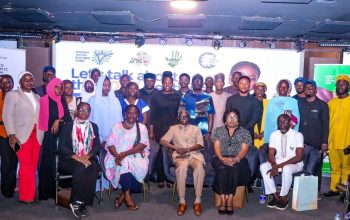
The Kozaki Transformation and Development Foundation, through its Male Feminist Network (MFN) Project, has convened Women’s Rights Organisations (WROs), Civil Society Organisations (CSOs) and other stakeholders in a renewed effort to strengthen collaboration and collective action against Gender-Based Violence (GBV) in Benue State.
The stakeholder engagement, held on Saturday, August 8, 2026, at the Kozaki Transformation and Development Foundation office facility, No. 5 Comfort Ter Shinyi Street, Atonko, Gboko, was organised under the theme, “Strengthening Collaboration Between WROs and Male Allies for a GBV-Free Society.” The meeting formed part of the Male Feminist Network Project’s broader efforts to engage men and boys as active partners in preventing violence and challenging harmful gender norms.
The three-hour engagement, which ran from 10:00am to 1:00pm, provided a platform for participants to examine the underlying social and cultural factors that contribute to GBV, particularly gender norms and harmful forms of masculinity, while exploring practical ways of strengthening cooperation between women’s rights groups and male allies.
Speaking during the session on the Male Feminist Network Project and its success stories in North Central Nigeria, the Program Officer of the Male Feminist Network Project, Mr. Manfred Akpen, introduced participants to the project and highlighted its experiences and achievements in engaging men in efforts to challenge harmful masculine ideologies and promote gender equality.
The first major technical session, titled “Understanding GBV: The Role of Gender Norms and Harmful Masculinities,” was facilitated by Mrs. Dooshima Agur, Founder/Executive Director of the Initiative for Women’s Health Development and Rights Protection (WRAHI Nigeria).
Mrs. Agur led participants in examining how deeply rooted gender expectations and harmful ideas about masculinity can contribute to violence and discrimination against women and girls. The session encouraged participants to look beyond individual acts of violence and consider the social norms and attitudes that can create an environment where GBV is tolerated or normalised.
The second session, “From Bystanders to Allies: Engaging Men and Boys in the Fight Against GBV,” was presented by Mr. Ukon David, a trained MFN Facilitator in North Central Nigeria, Lecturer at Tansian University Umunya, Fidei Polytechnic Study Campus, and Registrar of Labe School of Nursing, Catholic Diocese of Gboko.
Mr. David’s presentation focused on the importance of moving men and boys from passive observation to active participation in preventing GBV. The session emphasised the need for men to recognise their responsibility in challenging harmful behaviours, speaking against violence and supporting efforts that promote safer and more equitable communities.

Participants also engaged in an interactive energiser facilitated by Jennifer Inienger, a member of the Kozaki staff, alongside a selected participant. The activity provided an opportunity for participants to interact, reflect and engage more freely with the issues raised during the technical sessions.
The final major presentation, “Strengthening WRO–CSO and Male Ally Collaboration: From Dialogue to Collective Action,” was delivered by Mr. Simon Agbende. The session shifted the discussion towards practical collaboration, encouraging stakeholders to identify ways in which Women’s Rights Organisations, CSOs and male allies can complement one another in preventing and responding to GBV.
The meeting subsequently moved into an interactive reflection session where participants discussed possible areas of collaboration, identified action points and considered practical next steps for sustaining the partnership beyond the engagement.
Organisations represented at the stakeholder meeting included Spring of Hope for Girl Child Development Initiative; International Federation of Women Lawyers (FIDA); Women Children’s Health and Community Development Initiative; Initiative for Women’s Health Development and Rights Protection; Community Women Organisation; The Reach Foundation; Spring Bloom Women Cooperative; and Woman Live Your Dream Foundation.
The participation of the various organisations underscored the importance of a multi-stakeholder approach to addressing GBV, particularly one that brings together women’s rights advocates, community-based organisations, civil society actors and men committed to becoming positive allies in the fight against violence.
The engagement provided stakeholders with an opportunity to build relationships, share experiences and identify practical areas where their respective organisations can work together. Participants recognised that ending GBV requires more than responding to cases after violence has occurred; it also requires sustained prevention efforts, community education, positive male engagement and collective action to challenge harmful social norms.
The stakeholder meeting ended with a renewed commitment among participants to strengthen partnerships and build stronger male allies who can contribute meaningfully to preventing and ending Gender-Based Violence.
The Male Feminist Network Project reiterated the importance of continued collaboration between Women’s Rights Organisations, Civil Society Organisations and male allies, with the shared objective of contributing to a society where women, girls, men and boys can live free from violence and discrimination.
The organisers expressed optimism that the relationships and action points emerging from the engagement would translate into sustained collaboration and stronger community-level interventions against GBV.
“Together, We Can Build Stronger Male Allies and End GBV.”