By Ijeoma Olorunfemi
Innov8 Hub says it has trained more than 3,000 lecturers and facilitated the development of over 400 research prototypes from Nigerian tertiary institutions in the last five years.
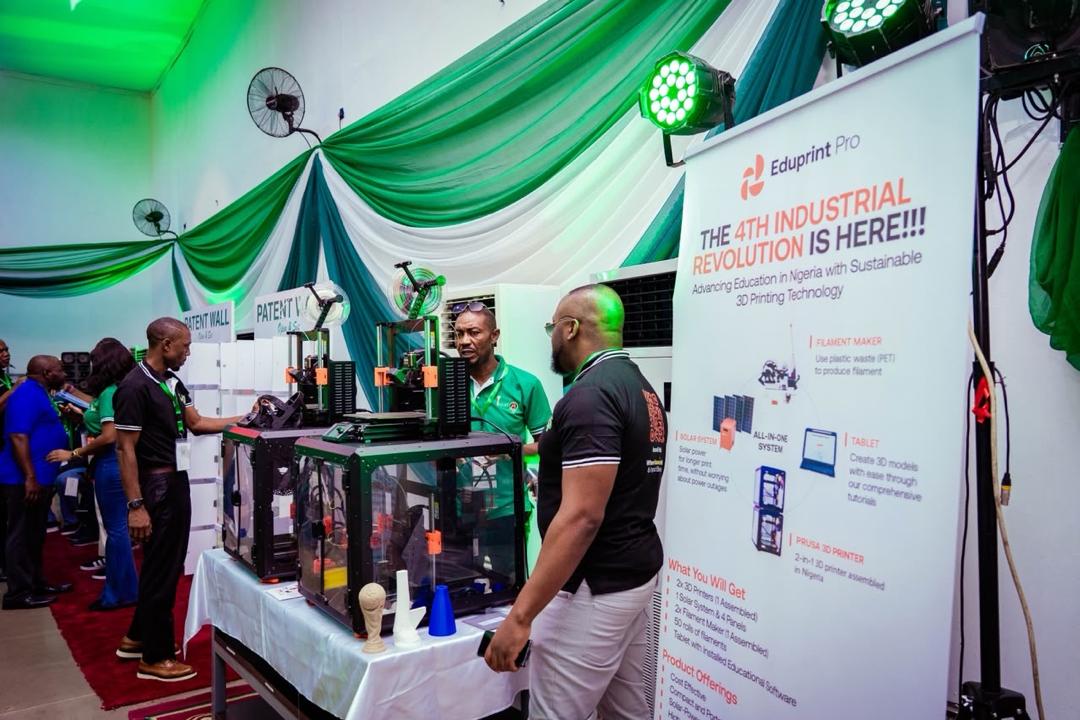
Mr Gregory Ibe (Jnr), Managing Director of Innov8 Hub, disclosed this on the sidelines of the Second Tertiary Education Trust Fund (TETFund) National Research Fair and Exhibition in Abuja.
Ibe said the hub had also facilitated many patents and copyrights, demonstrating its contribution to strengthening research, innovation and entrepreneurship in the country.
He said the achievements were driven by the hub’s collaboration with academia and efforts to transform research findings into practical solutions.
“People see the newest technology and feel as though it came out yesterday, but it takes a lot of work and years of effort to get to the stage where real solutions become commercialised.
“We have put in that work over the last five years, building more than 400 prototypes and laying the foundation for innovators to scale, attract investment and commercialise their products,” he said.
Ibe said Nigeria’s innovation ecosystem was growing, with government policies such as the Nigerian First Policy and increased support for research, providing opportunities for local innovators.
He expressed optimism that the country would soon witness more indigenous solutions and commercially viable products, stressing the need for sustained investment and confidence in local innovations.
According to him, Innov8 Hub operates more than 14 specialised laboratories covering areas such as waste-to-wealth initiatives and artificial intelligence development.
He said its partnership with TETFund and the Federal Ministry of Education was helping researchers access facilities and expertise locally, reducing the need to seek such opportunities abroad.
Similarly, Dr Deji Ige, Deputy General Manager of Innov8 Hub, identified inadequate collaboration, limited access to well-equipped innovation facilities and funding constraints as major challenges to research commercialisation.
Ige said innovators needed functional hubs to transform ideas into prototypes and develop them into minimum viable products that could attract investors and enter the market.
He disclosed that the hub had facilitated more than 30 patents through programmes organised in collaboration with TETFund and other partners.
He said the hub also worked with the World Intellectual Property Organisation and the Trademark Registry of the Federal Ministry of Industry, Trade and Investment to help innovators secure intellectual property rights.
Prof. Hayward Mafuyai, Chairman of the National Research Fund Screening and Monitoring Committee of TETFund, said the 2026 fair was designed to strengthen private sector participation in research commercialisation.
Mafuyai said the second edition built on the experience of the maiden fair held in 2024, with increased participation from industry, financial institutions, government and independent inventors.
He said the initiative was based on the triple-helix model of collaboration among academia, government and industry, aimed at connecting researchers with investors and manufacturers.
According to him, the exhibition features research outputs from universities, polytechnics, colleges of education and independent innovators, including those developing solutions to challenges in their communities.
He said the fair would provide opportunities for inventors to attract venture capital, scale production, create jobs and reduce Nigeria’s dependence on imported products.
“Our expectation is that an innovator with a prototype will meet an investor willing to provide the capital needed to take the product to the market.
“By the next fair, we hope to see products that are currently prototypes being mass-produced, with functional markets and value chains,” he said.
Some of the innovations showcased included Zero Cycle, a technology that converts petrol-powered motorcycles into electric-powered ones, and Recise, an eco-friendly mannequin produced from fashion and textile waste.
Dr Temitope Ojebi, developer of Zero Cycle, said the innovation used retrofit kits to convert existing petrol-powered motorcycles into electric ones without replacing their frames.
She said the technology would help commercial motorcycle operators reduce fuel and maintenance costs while eliminating exhaust emissions from the converted motorcycles.
Another exhibitor, Ayodele Joshua, said his innovation, Recise, converted fashion and textile waste into affordable, durable and environmentally friendly mannequins.
Joshua said the adjustable mannequin could accommodate sizes eight and 10, while its pinable surface allowed fashion designers to display and fit their designs.
The fair is themed: “Research to Market: Driving Innovation, Enterprise and National Prosperity”.
Innov8 Hub is a not-for-profit, non-governmental organization, with a mandate to enhance socio-economic growth and human capital development in Nigeria and beyond; through innovation, creativity, entrepreneurship, capacity building and venture creation.