By Joan Nwagwu, NAN
The Federal Government and International Labour Organisation (ILO) have called for stronger coordination, accountability and grassroots engagement to tackle child rights violations across Nigeria’s communities.
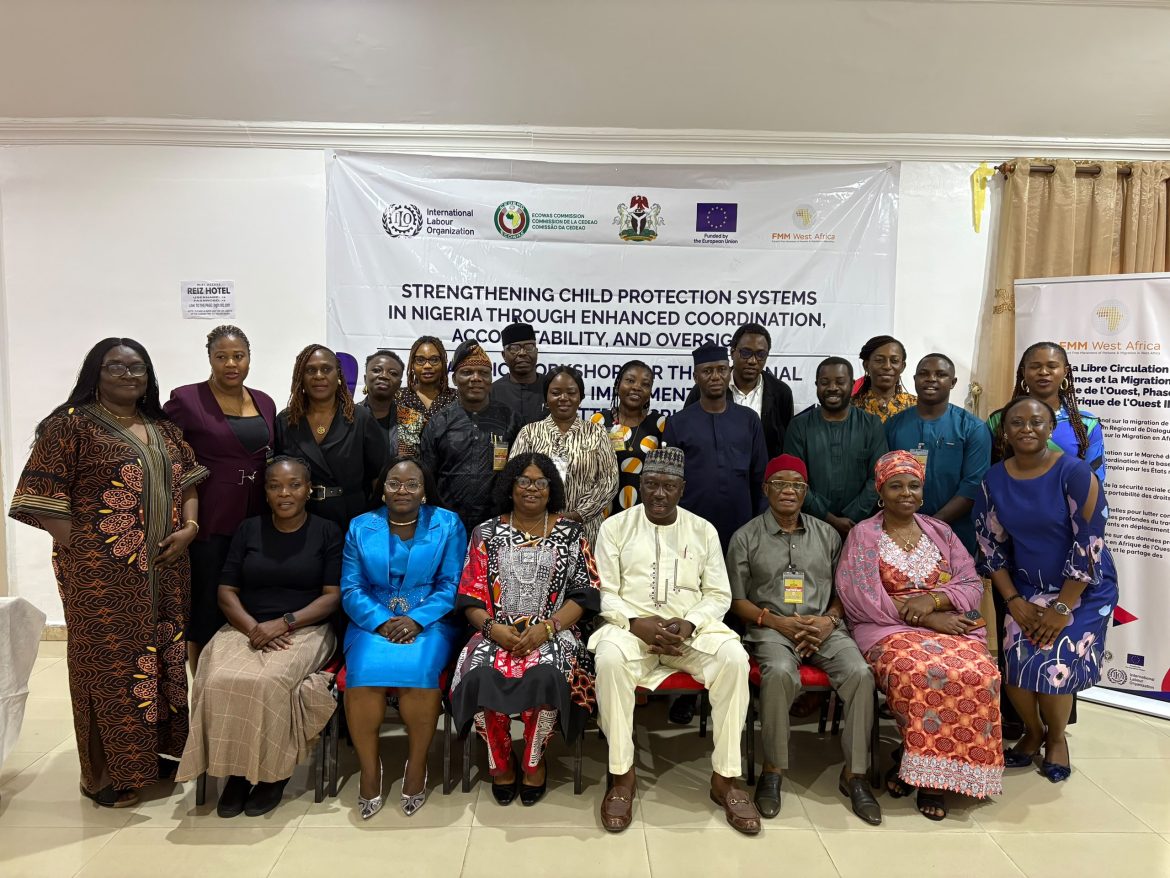
The Federal Ministry of Women Affairs and Social Development and ILO made the call in Abuja on Monday at a National Technical Workshop, themed “Strengthening Child Protection Systems.”
The five-day workshop was organised by the National Child Rights Implementation Committee (NCRIC) in collaboration with the ILO, ECOWAS Commission and FMM West Africa II Project funded by the European Union.
Mrs Esuabana Asanye, Permanent Secretary of the ministry, said children continued facing sexual abuse, trafficking, child labour, child marriage, violence, neglect and online exploitation despite government interventions nationwide
Asanye was represented by Mr Andrew Ali, Director, Child Development Department.
She said: “Child protection is a shared national responsibility and a fundamental obligation of all stakeholders. Every Nigerian child deserves to grow up in a safe and supportive environment.
“We must strengthen institutional capacity, technical competence and coordination mechanisms required to guarantee the protection, survival, development and well-being of every Nigerian child.
“The effectiveness of Nigeria’s child protection system depends significantly on institutions working together, coordinating interventions, sharing information and ensuring accountability for agreed commitments.
“These include institutional accountability among agencies.”
Asanye expressed concern over violence against children within families, citing a television report involving a woman who allegedly poisoned her co-wife’s two children, leaving one child dead, according to reports.
She identified the National Child Rights Implementation Committee (NCRIC) as the principal coordinating structure for implementing the Child Rights Act 2003 and related policies, currently undergoing review at national level.
She urged stakeholders to extend the workshop’s outcomes to State Child Rights Implementation Committees and Local Government Implementation Committees to strengthen child protection mechanisms nationwide, particularly within local communities.
“What we are doing here today must not end at the national level. The impact will be greater when extended to state and local government levels,” Asanye said.
Dr Vanessa Phala, ILO Country Director for Nigeria, said stronger institutional collaboration was essential to addressing child labour, trafficking, violence, exploitation and other violations affecting children nationwide.
Phala, represented by Dr Agatha Kolawole, National Project Coordinator, Support Free Movement of Persons and Migration(FMM), West Africa, called for coordinated action across sectors at every level nationally.
“Protecting children is not the responsibility of one institution alone. It is a collective responsibility requiring coordinated action across sectors and levels of governance,” Phala said.
Phala described child labour as both a child protection and labour rights issue, requiring collaboration among government institutions, schools, social welfare services, law enforcement agencies, social partners and workers’ organisations.
“Child labour remains both a child protection concern and a labour rights issue. Its elimination requires strong collaboration among relevant institutions, organisations, communities and families,” Phala said.
She commended Nigeria’s domestication of the Child Rights Act across several states and implementation of the National Action Plan for the Elimination of Child Labour, describing these as notable gains.
She also cited the Durban Call for Action and Marrakech Framework Principles as important frameworks supporting national efforts to protect children and eliminate exploitative labour practices across the country today.
Phala said the ILO remained committed to supporting Nigeria through the EU-funded Free Movement of Persons and Migration in West Africa Project and Netherlands-funded ACCEL Africa Project initiatives as well.
“Our success will not be measured by the number of meetings held or reports produced, but by the number of children protected from exploitation,” Phala said.
Also speaking, Co-Chair of NCRIC, MacJohn Nwaobiala, called for improved data collection, effective reporting systems and grassroots engagement, saying children remained exposed to neglect, exploitation and hazardous labour in communities nationwide today.
“Development starts at the grassroots, where many of the issues affecting children occur. We must understand their circumstances at local government and ward levels,” Nwaobiala said during the workshop today.
Nwaobiala acknowledged development partners’ support amid funding constraints and urged stakeholders to meet Nigeria’s reporting obligations to the United Nations, African Union and ECOWAS, improving accountability and compliance consistently nationwide.
He urged participants to translate workshop recommendations into practical interventions, strengthen advocacy and sustain coordination across national, state and local government levels to protect every child in communities nationwide effectively.