By Franca Ofili, News Agency of Nigeria, Abuja
The Corporate Accountability and Public Participation Africa (CAPPA) has warned that a proposed amendment to Nigeria’s tobacco control law could weaken existing safeguards and increase children’s exposure to electronic cigarettes and other nicotine products.
The organisation urged President Bola Tinubu to withhold assent to the bill, which has passed through both chambers of the National Assembly, pending further scrutiny of provisions it considers harmful to public health.
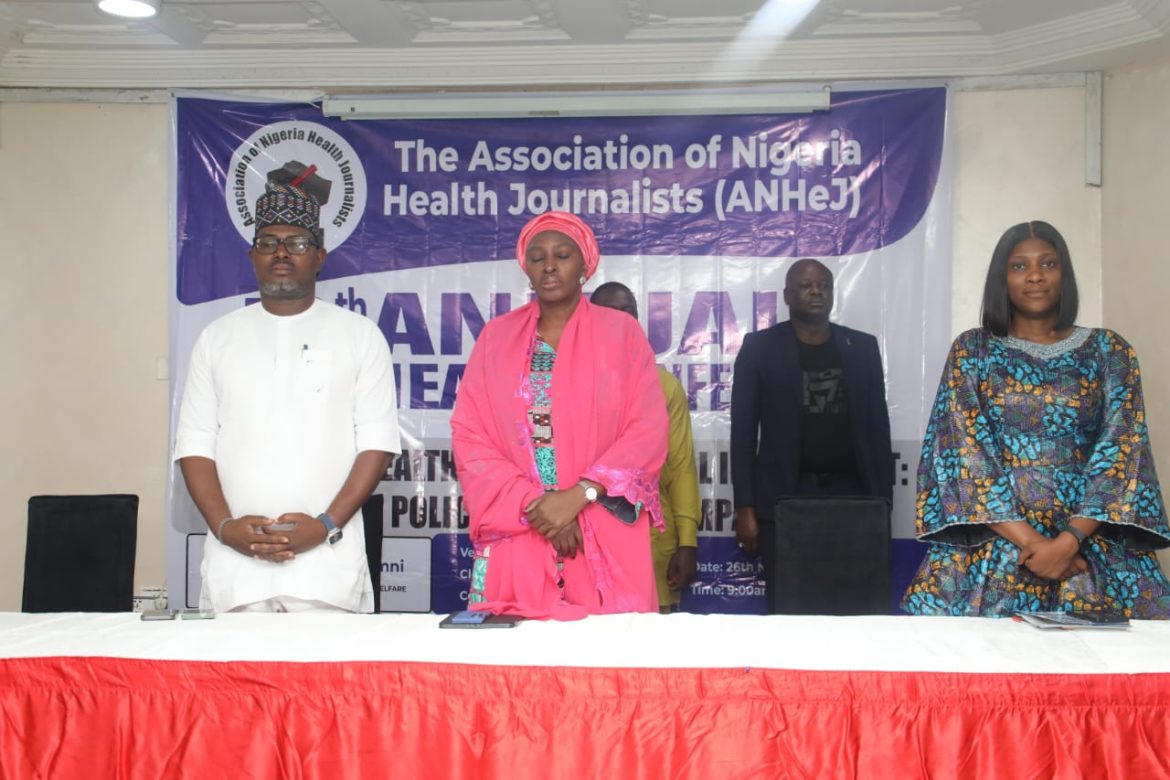
Speaking at the 10th annual conference of the Association of Nigeria Health Journalists (ANHeJ) on Thursday in Abuja, CAPPA’s Policy and Legal Officer, Shade Osi, expressed concern over provisions that could expand tobacco promotion, product sampling, digital marketing and access to emerging nicotine products.
The theme of the conference is “Nigeria’s Health Sector Renewal Investment: From Policy to Trangible Impact”.
Osi disclosed that a CAPPA survey found that even primary school pupils in Abuja had access to some vaping products, warning that their attractive flavours and scents could make it difficult for parents to detect their use.
She said flavoured vaping products were increasingly appealing to young people, adding that manufacturers and marketers were exploiting celebrity influence, social media and changing cultural attitudes to normalise nicotine consumption.
“You may come back home and your house smells very nice. You think somebody turned on incense or a diffuser, not knowing that your child has vaped something and left before you came back,” she said.
Osi cited Nigerian music star Burna Boy’s alleged involvement in promoting a vaping device as an example of how celebrity endorsements could influence young people’s attitudes towards nicotine products.
“Burna Boy is a public figure. He’s what almost every young person aspires to be like, and he’s marketing a product through influencer marketing,” she said.
She warned that the growing popularity of vapes, shisha and nicotine pouches required urgent regulatory attention, stressing that emerging nicotine products should not be considered harmless simply because some were different from conventional cigarettes.
“There is nothing novel about something that will kill people. I’m talking about shisha, vapes and all non-combustible tobacco products. I’m talking about nicotine pouches. There is nothing novel about them,” she said.
According to her, the National Tobacco Control Act 2015 and its 2019 regulations have limitations in addressing emerging products because their provisions largely focus on products derived directly from tobacco leaves.
“Some of them are chemicals. Some are nicotine chemically engineered in the laboratory. They are not products that come directly from tobacco leaves, and because of that, the law cannot adequately regulate them,” she said.
Although the Standards Organisation of Nigeria was working on regulatory standards for some of the products, Osi questioned why they remained widely available without a comprehensive regulatory framework.
She also faulted proposed provisions that could permit product sampling at points of sale and public places, warning that such measures could create opportunities for increased exposure and promotion of nicotine products.
The CAPPA official equally criticised provisions that could facilitate online tobacco sales, arguing that age-verification requirements would offer inadequate protection to children in a country where enforcement remained weak.
“Does age verification work in Nigeria? A 10-year-old can enter a store and tell you he is 18. Nobody even bothers. Parents send their children to buy these things, and you’re saying there should be age verification,” she said.
Osi maintained that Nigeria’s major challenge was not necessarily the absence of tobacco control laws but inadequate enforcement of existing regulations.
“Strong laws, weak enforcement is as good as paper. Turn it to toilet paper,” she said.
She explained that existing regulations provided for designated smoking areas in certain public facilities to protect non-smokers from exposure to tobacco smoke, stressing that smokers should not impose their habits on others.
Osi urged the Federal Government to strengthen tobacco control measures, citing Singapore, Australia, Bhutan and the Maldives as countries that had adopted stricter approaches to discourage tobacco consumption and protect younger generations.
She particularly cited the Maldives’ generational tobacco ban and Singapore’s strict enforcement of designated smoking areas and penalties for violations as examples Nigeria could learn from.
On the proposed amendment, Osi alleged that some controversial provisions were not adequately subjected to public scrutiny during the legislative process.
“The public hearing that held did not contain these offending provisions. How did we get here?” she queried.
She called on the National Assembly to revisit the bill and carefully consider its potential public health implications before its passage into law.
Osi also urged the Attorney-General of the Federation to ensure proper legal scrutiny of the proposed legislation, while calling on journalists to intensify investigations and reporting on tobacco industry activities and the growing availability of emerging nicotine products.
“If this bill sees the light of day, it will be very sad. Don’t take us back to the dark ages,” she warned.
She urged media practitioners and civil society organisations to sustain public advocacy for stronger tobacco control policies, insisting that the protection of Nigerians’ health should take precedence over commercial interests. (NAN)