By Grant Onyeke/Perpetua Onuegbu
Amnesty International Nigeria has urged Nigeria and the international community to intensify efforts toward ending atrocities and restoring peace in conflict-ridden Sudan.
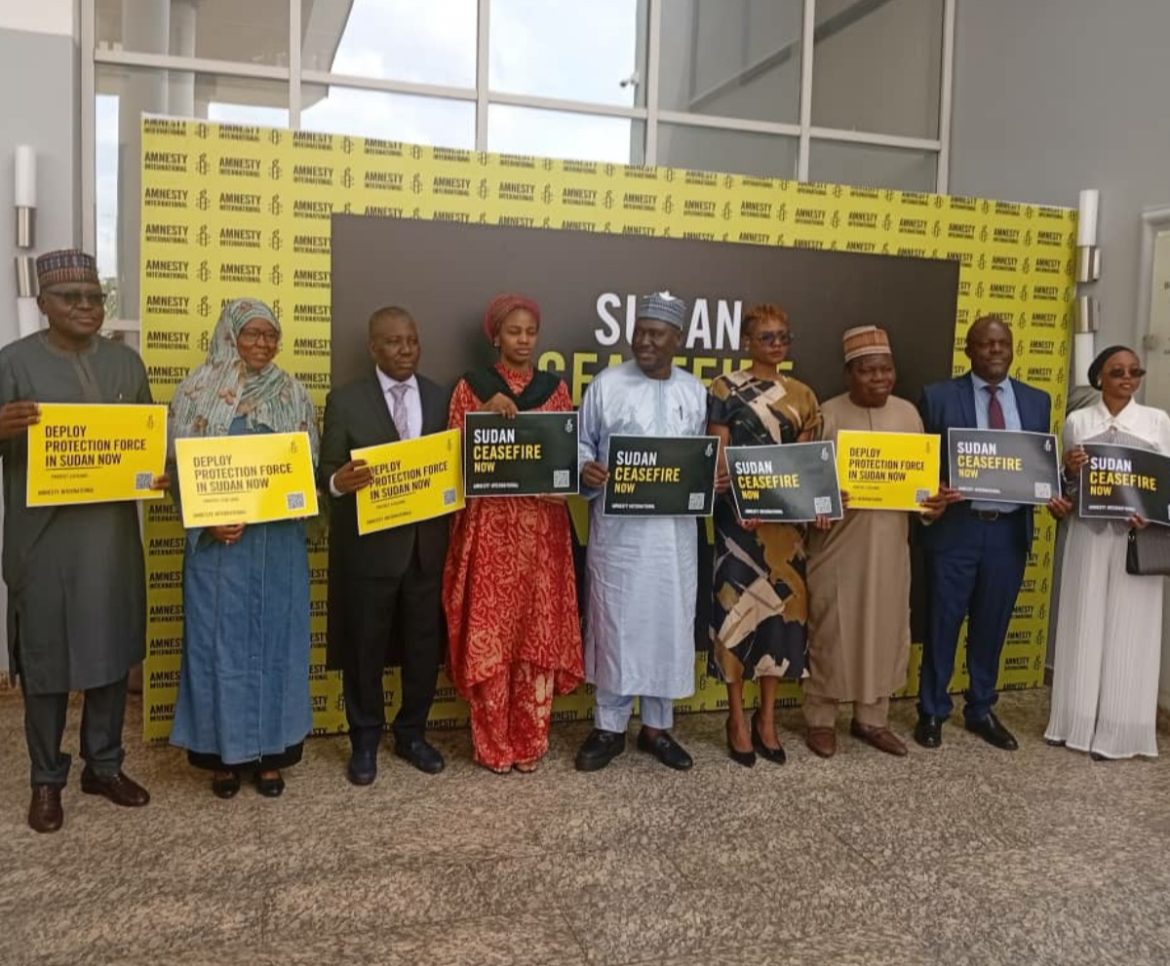
The Executive Director of the Civil Society Legislative Advocacy Centre (CISLAC) and Head of Amnesty International Nigeria, Auwal Rafsanjani, made the call during a Sudan solidarity and advocacy engagement on Wednesday in Abuja.
Rafsanjani said the event highlighted the plight of innocent civilians and reaffirmed that every human life matters, regardless of geography, ethnicity or political affiliation.
He said Amnesty International’s report, City Under Siege, Children Under Fire, documented alleged crimes against humanity committed during the conflict in North Darfur, Sudan.
According to him, the report details deliberate attacks on civilians, unlawful killings, sexual violence, forced displacement and widespread destruction affecting vulnerable populations, especially women and children.
Rafsanjani described Sudan’s conflict as one of the world’s worst humanitarian crises, with millions displaced, healthcare systems collapsing and humanitarian access severely restricted.
He urged Nigeria, the African Union (AU), ECOWAS, the United Nations and other partners to strengthen humanitarian access, protect civilians and ensure accountability for human rights violations.
Rafsanjani said Nigeria had historic ties with Sudan, adding that over seven million Nigerians live in Sudan; hence, it should play a leading role in supporting lasting peace through diplomacy, dialogue and regional cooperation.
He commended Amnesty International’s East and Southern Africa Regional Office for collaborating across borders, saying African solidarity remained essential to ending human rights abuses.
Rafsanjani urged governments, civil society, diplomats and the media to translate solidarity into concrete action, saying the Sudanese people deserved justice, peace and restored human dignity.
Also speaking at the engagement, Nigeria’s former ambassador to Sudan, Amb. Suleiman Dahiru, said that where there was no justice and fairness, there could be no peace.
Dahiru said that Amnesty International played a vital role in promoting human rights by exposing abuses, advocating reforms and supporting victims, in spite of lacking enforcement powers.
He called for the financial empowerment of the AU so that it could decisively intervene in Sudan, adding that if the organisation did not have the financial strength, it would only end up as a “talking shop”.
Dahiru urged Nigeria to prioritise resolving domestic challenges, including insecurity and poverty, before committing resources to Sudan.
He, however, urged Africa not to abandon Sudan because millions of Africans continue to suffer there.
The former envoy condemned xenophobia attacks and warned against stereotyping Nigerians while also calling for humanitarian solidarity with Sudanese victims.
On his part, Dr Tigere Chagutah, Regional Director, East and Southern Africa, Amnesty International, urged Nigeria to commit, at the highest level, to championing efforts to address Sudan’s crisis.
Chagutah called on Nigeria to use its influence to push for an immediate ceasefire, end hostilities and support the deployment of a peacekeeping force to facilitate humanitarian assistance and protect civilians.
He also urged Nigeria to prioritise the plight of children in global discussions on Sudan and strengthen justice and accountability through United Nations and African Union mechanisms investigating atrocities and human rights violations.
The News Agency of Nigeria (NAN) reports that the Amnesty International report highlighted patterns of abuse perpetrated by militias, including sexual slavery, rape and other forms of sexual violence against women and underage girls.
NAN also reports that other abuses include unlawful detention and hostage-taking, the recruitment and use of children to fight, gather intelligence and herd livestock, as well as violence and abuse against persons with disabilities and the elderly. (NAN)