Nigeria has recorded a 17 per cent reduction in maternal deaths in 172 local government areas with high maternal mortality burden, even as the Federal Government says it has revitalised 3,536 primary healthcare centres and expanded health insurance coverage to nearly 24 million Nigerians under its ongoing health sector reform programme.
The Federal Government also disclosed that newborn deaths declined by four per cent in the targeted local government areas between 2023 and 2025, while more than 17 million girls have received the Human Papillomavirus, HPV, vaccine as part of efforts to strengthen preventive healthcare and reduce the country’s disease burden.
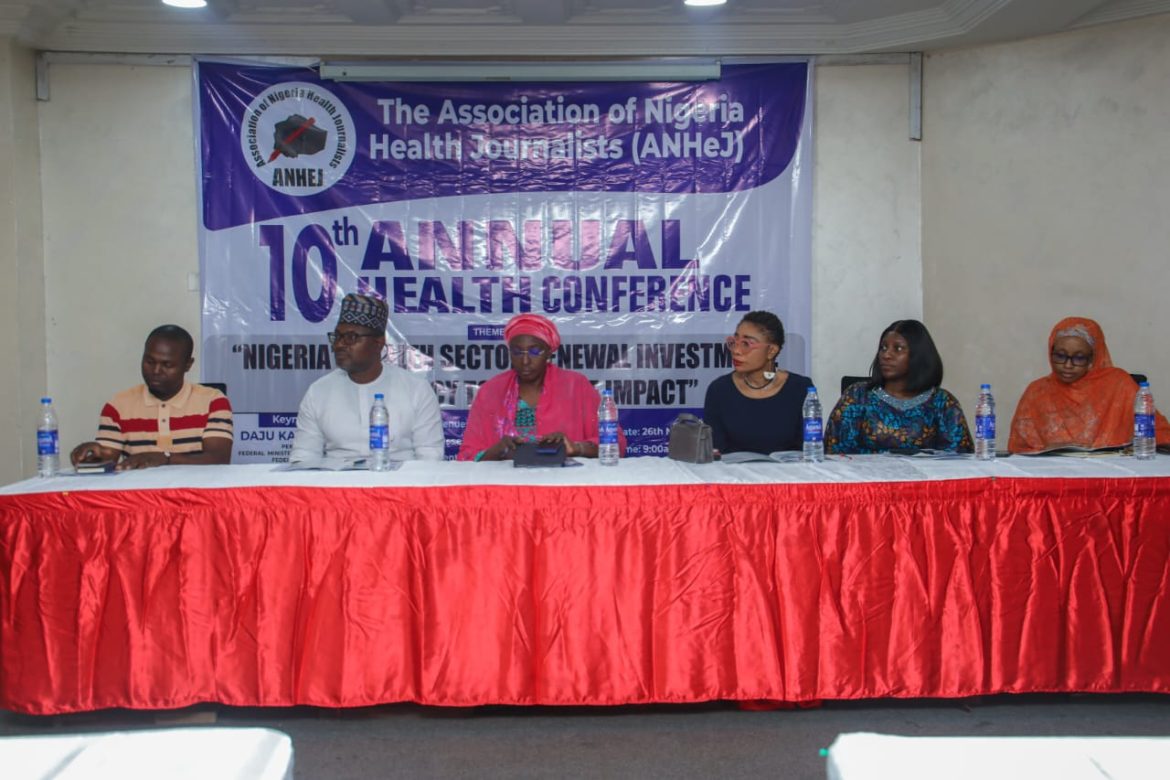
The Permanent Secretary, Federal Ministry of Health and Social Welfare, Daju Kachollom, disclosed these figures while declaring open the 10th Annual Health Conference of the Association of Nigeria Health Journalists, ANHeJ, in Abuja on Thursday.
Kachollom, who challenged journalists to move beyond reporting government announcements to independently investigating the actual impact of health sector investments, said Nigeria’s health reforms must ultimately be measured by lives saved, improved healthcare access and better health outcomes.
Speaking on the theme, “Nigeria’s Health Sector Renewal Investment: From Policy to Tangible Impact,” she said the figures represented some of the gains recorded since President Bola Tinubu launched the Nigeria Health Sector Renewal Investment Initiative in December 2023.
According to her, all 41 Presidential Health Sector Commitments have been achieved, while 12 of the 13 indicators being tracked under the initiative have recorded improvements.
She disclosed that the number of primary healthcare facilities revitalised had reached 3,536, with another 900 expected to be added, while the proportion of supported facilities in the 172 high-burden local government areas with at least two midwives or community health extension workers increased from 12 per cent to 91 per cent.
Kachollom further revealed that skilled deliveries in the targeted facilities increased from 4.8 million in 2023 to 7.9 million by mid-2026.
On preventive healthcare, she said routine vaccination campaigns had reached 100 million children, while the HPV vaccination programme had covered more than 17 million girls.
She added that health insurance enrolment had increased from approximately 16 million Nigerians to nearly 24 million, while 10 factories and manufacturing lines had been commissioned to boost local production of medicines, diagnostics, mosquito nets and medical oxygen.
The Permanent Secretary also disclosed that combined health budgets of state governments rose from N1.97 trillion in 2023 to more than N3.3 trillion in 2026.
Despite the reported progress, Kachollom acknowledged that significant challenges remained, particularly in child nutrition, healthcare affordability, quality of services and the uneven distribution of health workers.
She said stunting remained alarmingly high, affecting about four in every 10 Nigerian children under five, while only about one in 10 Nigerians enrolled in health insurance was covered by the scheme, despite the increase in overall enrolment.
The Permanent Secretary also expressed concern over poor implementation of resolutions reached at the National Council on Health, revealing that only 412 of the 740 expected reports on the implementation of previous resolutions had been received.
She said 10 states recorded implementation levels of nearly 40 per cent, warning that government resolutions that were not implemented amounted to little more than announcements.
“A resolution that is never implemented is just another announcement,” she declared.
Kachollom consequently challenged health journalists to subject government claims to independent verification, visit facilities said to have been revitalised and track commitments made by federal and state governments.
“When we announce a revitalised facility, we expect that you go and look at it. When your state makes a commitment at council, ask a year later what became of it.
“Ask what changed, for whom and how much. If the answer is nothing, tell Nigerians and tell us,” she said.
She also urged journalists to verify information before publication, warning that misinformation and careless reporting during disease outbreaks could undermine public confidence, discourage people from seeking medical attention and disrupt public health interventions.
The Permanent Secretary cited Nigeria’s recent Ebola scare as an example of the importance of transparent communication, commending journalists for helping to communicate the situation to Nigerians and prevent unnecessary panic.
She disclosed that Nigeria had recorded no Ebola case for more than 21 days, expressing confidence that the country was Ebola-free.
Kachollom further called on the media to intensify public awareness on antenatal care, skilled birth attendance, childhood immunisation, health insurance enrolment and the prevention of non-communicable diseases, including hypertension and diabetes.
On antimicrobial resistance, she announced that Nigeria would host the fifth Global High-Level Ministerial Conference on Antimicrobial Resistance from December 6 to 8, 2026, the first time the event would take place on African soil.
She said ministers of health from more than 100 countries were expected to attend the conference, where the Abuja Compact would be adopted.
Describing antimicrobial resistance as a silent pandemic, she warned that the failure of antibiotics could make routine infections, surgical procedures and childhood illnesses increasingly dangerous.
She urged Nigerians to avoid self-medication and ensure they completed prescribed antibiotic treatments, while disclosing that the National Council on Health had adopted a new policy requiring antibiotic prescriptions to be issued by duly licensed and authorised professionals.
The Permanent Secretary also promised improved access to government health information, saying the ministry would publish its health sector performance report, a report on primary healthcare functionality and the 2023–2024 National Health Accounts.
Earlier, ANHeJ President, Joseph Kadiri, said the association’s 10th annual conference marked a decade of sustained commitment to accurate, responsible and impactful health journalism.
Kadiri said the conference theme was designed to interrogate how government policies, reforms and financial investments could translate into measurable improvements in the lives of ordinary Nigerians.
He stressed that the success of health sector interventions should not be determined by policy announcements, budgetary allocations and official commitments alone, but by reduced maternal and child mortality, affordable medicines, functional primary healthcare facilities and improved access to quality healthcare.
The ANHeJ president said journalists had a responsibility to scrutinise public expenditure, investigate government claims, amplify the experiences of vulnerable populations and hold institutions accountable for their commitments.
He offered the association’s partnership to the Basic Health Care Provision Fund gateways and the Ministerial Oversight Committee, proposing that journalists be engaged to monitor healthcare projects across states, assess progress and report implementation challenges.
According to him, such collaboration would strengthen accountability and provide independent insights into the impact of increased health funding.
Kadiri identified healthcare financing, universal health coverage, maternal and child survival, immunisation, primary healthcare strengthening and cancer prevention and treatment as some of the critical issues requiring sustained attention.
He expressed concern over high out-of-pocket healthcare expenditure, which he said continued to push vulnerable families into financial hardship whenever they required medical attention.
The ANHeJ president commended Kachollom for supporting the conference financially and for recognising the media as an important partner in health sector reforms.
He also acknowledged the contributions of the Director-General of the National Agency for Food and Drug Administration and Control, NAFDAC, Prof. Mojisola Adeyeye; the African Health Budget Network; the Medical Laboratory Science Council of Nigeria; the National Health Insurance Authority; and the FCT Health Services and Environment Secretariat, among other partners.
Meanwhile, the Nigerian Cancer Society has called on the Federal Government to prioritise cancer prevention, early detection, diagnosis, treatment and palliative care in its ongoing health sector reform agenda.
The society, in a goodwill message delivered by Ambassador Chukwuma Matthew, on behalf of its President and Chief Executive Officer, Prof. Abidemi Emmanuel Omonisi, said cancer remained a major public health concern requiring sustained political commitment, adequate financing, accessible healthcare infrastructure and a skilled workforce.
It urged policymakers to move beyond policy pronouncements to concrete actions that would expand access to affordable cancer screening, strengthen diagnostic and treatment services and improve support for patients and survivors.
The society also stressed the importance of health journalism in promoting early presentation, encouraging screening, combating stigma and ensuring cancer remained a priority in national health discussions.
Similarly, the African Health Budget Network called for increased domestic health financing, stronger accountability for health budgets and meaningful participation of women, young people and persons with disabilities in health policy processes.
Its Health Systems Transition Lead, Khadijat Bobboyi, said the media remained indispensable in ensuring that advocacy messages reached policymakers, communities and ordinary Nigerians.
She argued that without effective media engagement, many health sector interventions and advocacy efforts would fail to receive the public attention required to generate meaningful change.
The Institute of Human Virology Nigeria, IHVN, also reaffirmed its commitment to working with health journalists to strengthen public understanding of HIV/AIDS, tuberculosis, malaria, emerging infectious diseases and other public health challenges.
In its goodwill message, the institute described health journalism as an essential instrument for saving lives, shaping policies, promoting accountability and transforming communities.
It urged journalists to uphold professionalism, accuracy and ethical responsibility while deepening their understanding of scientific research and public health policies.
The institute also encouraged reporters to go beyond highlighting health sector challenges by documenting successful interventions, innovations and communities whose lives had been transformed through improved healthcare delivery.
The conference, which marks ANHeJ’s 10th anniversary, brought together government officials, health professionals, policymakers, development partners, civil society organisations and media practitioners to examine Nigeria’s health sector reforms and identify practical ways of translating investments into improved health outcomes.