
When Ojo Oluwatobi Felicia graduated from the University of Abuja with a degree in English Education, her plan did not include a sewing machine. Yet less than a decade later, she is the founder and Creative Director of Towbee Stitches, one of Nigeria’s growing bespoke fashion labels serving clients at home and across the diaspora.
She explained that her transition from education to entrepreneurship was deliberate. She said she had always had a passion for creativity and fashion, and that she enjoyed bringing ideas to life through clothing and making people feel beautiful and confident. That passion, she added, eventually grew into Towbee Stitches.
Oluwatobi said she began learning fashion design immediately after secondary school. She noted that it was not because she could not find a job after graduation, but because she intentionally developed the skill, seeing it as both her passion and a business opportunity.
She said her background in English Education had also shaped her approach to business. She explained that studying literature and communication taught her how to understand people’s stories, and that understanding the client’s vision was the first step in her design process.
“My love for creativity and making people feel confident inspired me to start Towbee Stitches,” she said.
Building a Business on Two Pillars
The brand is now known for bespoke outfits, bridal wear, and custom designs. Oluwatobi said she built Towbee Stitches on two non-negotiables: quality craftsmanship and customer satisfaction. She noted that the approach had earned her clients at home and abroad, and that a reputation for attention to detail kept customers returning and referring others.
She recalled that the turning point came when satisfied clients began referring others without her asking. She said that experience confirmed her belief that consistency and quality would always attract the right customers.
According to her, every piece follows a structured process: understand the client’s vision, sketch the design, select fabrics, create the outfit, and ensure a perfect finish. She added that she blends traditional craftsmanship with modern styles to create unique designs, and described the brand’s identity in three words: elegant, timeless, and confident.
Oluwatobi said the move from education to business also exposed her to new challenges. She listed building trust, getting clients, and working with limited resources as some of the earliest hurdles. She added that the rising cost of materials and maintaining profitability remained ongoing concerns.
She explained that her response had been to focus on what she could control: professionalism, transparent pricing, and clear timelines. She argued that excellence was expensive, but mediocrity cost more, because quality work lasted years instead of months.
She recalled one major test when she had to create multiple outfits within a very short deadline for a major event. She said the team delivered successfully, and that the experience reinforced her commitment to never compromising on standards.
Beyond building her own business, Oluwatobi said she was using education to empower others. She explained that many young designers in Nigeria had talent but lacked practical knowledge in pricing, client management, production, and quality control — areas she said were often missing in formal training.
Through structured apprenticeship programmes at Towbee Stitches, she said trainees learn by working on live orders. From pattern drafting and fabric sourcing to customer relations and finance, she said the goal was to teach not only how to sew, but how to survive as a business owner.
“Teaching someone to sew is one thing. Teaching them to survive as a business owner is another,” she said.
She added that several of her mentees had gone on to launch their own labels. She cited one trainee who had successfully started her own fashion business and was growing steadily, creating jobs for cutters, tailors, models, and marketers in the process.
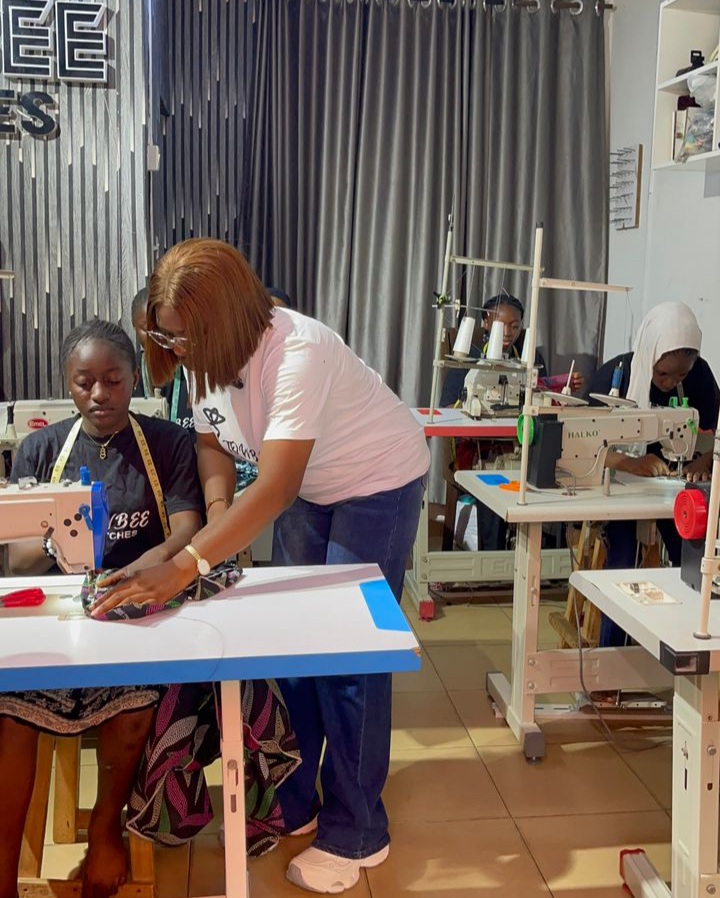
She said her belief in skills transfer stemmed from her conviction that education should lead to livelihoods. She noted that business management, customer service, and consistency were the three areas she emphasized most with her apprentices.
For Oluwatobi, the link between education, fashion, and business is confidence. She said fashion was not just about clothing, but about confidence, creativity, and creating opportunities for others. She noted that a well-made outfit could change how a person walked into an interview, an event, or a wedding.
“The right outfit doesn’t just change your appearance, it changes how you feel about yourself,” she said.
She explained that her design philosophy was shaped by the problems clients brought to her. She cited brides who wanted to feel regal on their day and professionals who needed outfits that projected authority without words. She said the brand’s bridal collections had become a talking point for their mix of structure, comfort, and intricate detailing.
She added that her favorite fabric to work with was crepe, and that her creative inspiration came from research, prayer, and observing everyday life.
Recognition and Institutional Support
In 2023, Oluwatobi’s impact earned her the Skywise Entrepreneurship Grant, an award that recognizes Nigerian entrepreneurs with innovation and economic potential. She said the grant helped her invest in better equipment, expand her workspace, and formalize the mentorship programme.
She reflected that the recognition told her the work she was doing mattered beyond fashion, and that it reminded her she was not alone. She said business had experienced steady growth over the years, though she declined to disclose specific figures.
She added that word-of-mouth referrals and client testimonials had driven expansion without heavy reliance on paid advertising.
Like many Nigerian entrepreneurs, Oluwatobi said she contends with structural challenges. She listed power shortages, import delays, and retaining skilled artisans as major hurdles. She also noted that the market sometimes undervalued bespoke work compared to imported or mass-produced clothing.
She said her response had been to educate clients on the value of craftsmanship. She explained that in Nigeria’s fast-growing fashion sector, worth billions and blending tradition with global trends, Towbee Stitches had chosen a different path: bespoke.
She said bespoke was slow, deliberate, and personal, and that the brand solved problems for clients rather than just selling clothes. She added that in an industry known for fast trends and fierce competition, she was carving out space by focusing on longevity: durable designs, empowered people, and sustainable growth.
Looking ahead, Oluwatobi said Towbee Stitches was expanding its bridal line, exploring sustainable fabrics, strengthening its online presence, and developing a digital mentorship module.
She said her long-term goal was a globally recognized brand with ready-to-wear collections and international clients. But beyond the brand, she said she wanted to leave a legacy of excellence, creativity, and empowered designers.
“I don’t just want to leave behind clothes,” she said. “I want to leave behind designers, entrepreneurs, and clients who feel better because they met Towbee Stitches.”
For other graduates contemplating entrepreneurship, Oluwatobi’s advice was direct. She urged them not to limit themselves to job hunting, but to learn a valuable skill, stay open to entrepreneurship, and keep improving themselves. She said opportunities often came to those who created value.
She added that between teaching and entrepreneurship, she would choose both, because she believed the two were connected in building a sustainable fashion ecosystem.