By Sumaila Ogbaje
Mrs Mernan Oluyede, President, Defence and Police Officers’ Wives Association (DEPOWA), has called for urgent action to expand access to cancer care and eliminate barriers preventing timely diagnosis and treatment.
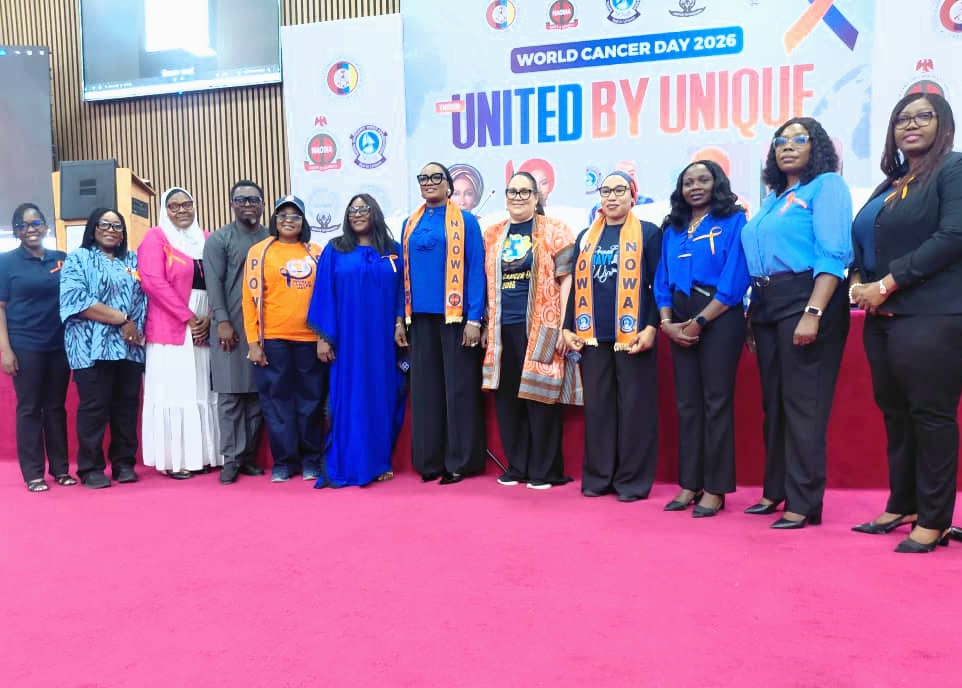
Oluyede made the call at the World Cancer Day Summit organised by DEPOWA in Abuja, as part of activities marking the 2026 World Cancer Day.
She said that while progress had been recorded in cancer awareness and treatment, many Nigerians were still unable to access care due to cost, location and limited health infrastructure.
According to her, World Cancer Day goes beyond symbolism, serving as a global call to action to confront the devastating impact of cancer on individuals, families and communities.
She noted that the 2026 theme, “United by Unique,” highlighted the personal nature of every cancer journey, stressing that unity among institutions and communities remained critical to achieving lasting solutions.
”Every cancer journey is unique, but our response must be collective. When individuals, families and institutions come together, we can drive meaningful change and save lives,” she said.
Oluyede commended sister associations under the DEPOWA platform for jointly hosting the summit, describing the collaboration as a strong statement of solidarity in the fight against cancer.
She also acknowledged ongoing national efforts to strengthen cancer care, noting that advocacy, grassroots awareness and early detection must be sustained to complement government initiatives.
She stressed the need to encourage regular screening, promote preventive care and strengthen support systems for patients and their families.
The DEPOWA president said that the association would continue to champion cancer awareness, support survivors and honour the memories of those lost to the disease.
She urged stakeholders, community leaders and partners to work together to ensure that no one was denied cancer care because of financial constraints or geographical location.
The President of the Nigerian Army Officers’ Wives Association (NAOWA), Mrs Safiyyah Shaibu said that frequent deployments, relocations and service-related pressures often complicated access to timely and continuous treatment.
Shaibu said cancer placed an added burden on military households, stressing that effective care must go beyond medication to address mental health, family dynamics and continuity of treatment, particularly for spouses, children and retirees affected by the disease.
She called on policymakers, healthcare professionals and partners to adopt care models that recognised the unique circumstances of military families.
According to her, they must assure sustained advocacy, awareness and psychosocial support for those currently battling cancer of to ensure no military family faced the disease alone.
In her remarks, the National President of the Naval Officers’ Wives Association (NOWA), Mrs Aisha Abbas, said the World Cancer Day theme, “United by Unique,” underscored the need to place people, not just the illness, at the centre of cancer care.
Abbas noted that every patient’s journey was defined by courage, pain, hope and resilience.
She said naval families were no strangers to the pressures of deployments and uncertainties, stressing that cancer cut across ranks, services and communities, but unity among military families remained a powerful force in confronting the disease and supporting those affected.
The President, Nigerian Air Force Officers’ Wives Association (NAFOWA), Mrs Ngozi Aneke, represented by Dr Modupe Ogunsina, said the 2026 theme underscored the shared resilience of military officers’ wives and the need for collective action to ensure cancer did not define or defeat affected families.
She said NAFOWA remained deeply committed to cancer awareness and prevention through sustained screening initiatives and access to screening facilities for women.
According to her, prevention and regular, deliberate screening are far less costly than treating advanced-stage cancer.
She urged women to prioritise their own health by making cancer screening a routine habit, noting that early detection saved lives and encouraged participants to share the message widely to reduce fear, increase awareness and strengthen community response to cancer.
Also speaking at the event, the President of the Police Officers’ Wives Association (POWA), Mrs Elizabeth Egbetokun, said fear and misinformation remained major obstacles to early cancer detection, noting that many women still believed cancer was automatically a death sentence.
She said POWA’s experience from community outreach and sensitisation programmes showed that awareness and regular screening were the most effective tools in changing perceptions and ensuring timely medical intervention.
In her presentation, Dr Uchechukwu Shagaya, a Senior Consultant Oncologist, advised women to take prevention seriously by adopting healthy lifestyles, including regular physical activity, balanced nutrition and avoiding of unhealthy lifestyle.
Shagaya stressed that early detection remained central to successful treatment outcomes, urging women to embrace regular and age-appropriate cancer screening, seek prompt medical attention when symptoms appeared and adhere strictly to prescribed treatment plans.
She added that cancers detected early were often treatable and compatible with long, productive lives. (NAN)