By Emmanuel Oloniruha
The Nigeria Governors Spouses Forum (NGSF) has called for a collective effort between men and women to combat the rising menace of digital violence against women and girls.
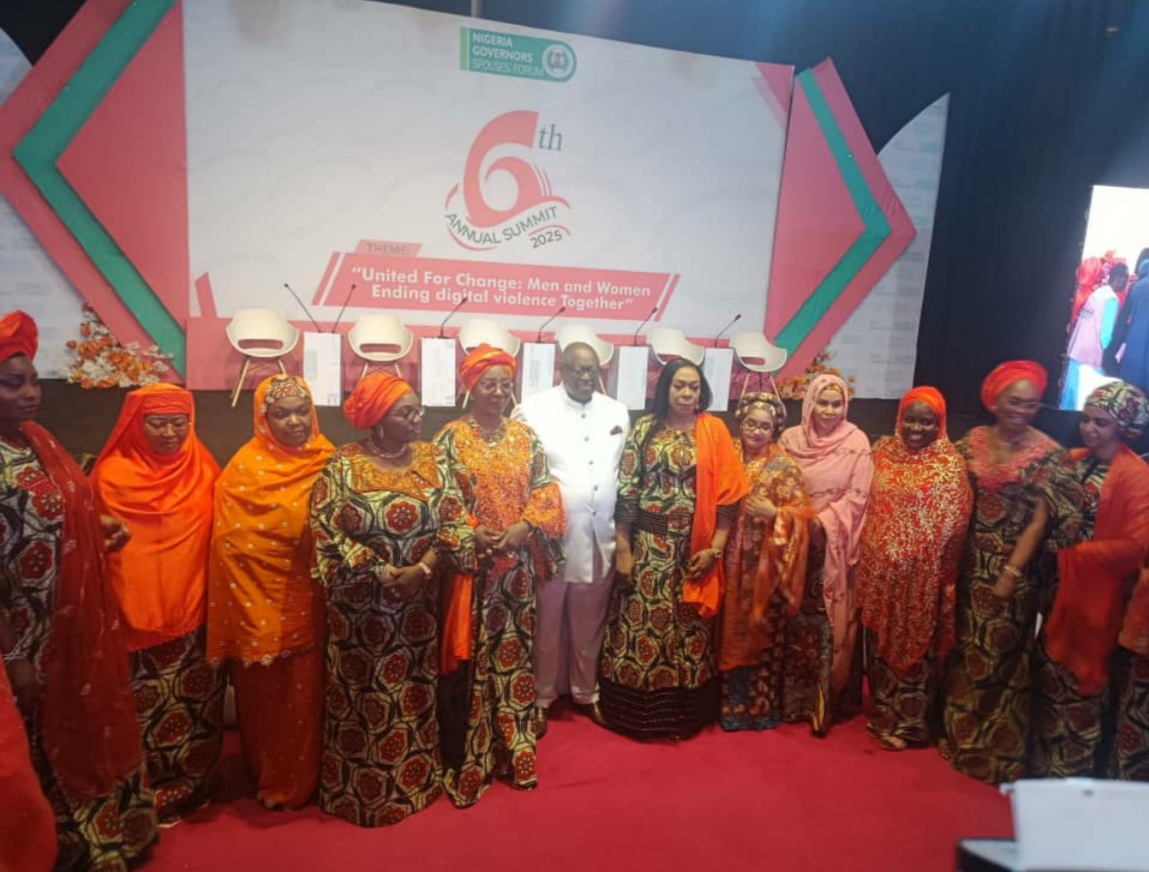
The NGSF Chairperson, and First Lady of Kwara, Prof. Olufolake AbdulRazaq, made the appeal while delivering the address at the Sixth Annual Conference of the NGSF held on Thursday in Abuja.
The annual summit was themed: “Unite for Change; Men and Women to Ending Digital Violence Together.”
AbdulRazaq, who is also the Founder of the Ajike People Support Centre, highlighted the urgency of addressing online abuse, harassment, exploitation, and misinformation targeting women and girls.
She said that digital spaces should be platforms for “learning, opportunity, creativity, and empowerment—not platforms for intimidation or harm.”
She said that the misuse of rapidly evolving digital technologies was amplifying violence against women and girls, with far-reaching consequences that erode trust in information systems, necessitating a collective approach to end it.
“The growing global backlash and the misuse of rapidly evolving digital technologies are no doubt amplifying violence against women and girls,” she said.
The NGSF chairperson commended members for their impactful interventions over the past five years, noting the forum’s active engagement in advocacy, partnerships, and collaborations to ensure Nigerian women and girls harness their full potential.
She recalled that the Forum’s amplified advocacy led the Nigeria Governors Forum (NGF) to declare a State of Emergency on Sexual and Gender-Based Violence (SGBV) in 2020 following the spike in incidents during the COVID-19 pandemic lockdown.
AbdulRazaq highlighted the achievements of the NGSF to include expediting action for the passage of the Violence Against Persons Act, implementing the Gender-Based Violence Action Plan and providing leadership for State SGBV coordinating mechanisms.
Others according to her includes, expanding areas of influence to include drug abuse eradication, cancer awareness, economic empowerment, menstrual hygiene, and improved nutrition.
Also noted by her was the increasing number of Sexual Assault Referral Centers (SARCs) and Shelters for women and children.
AbdulRazaq commended the First Lady of Nigeria, Sen. Oluremi Tinubu, for her leadership and commitment to a better deal for Nigerian women and girls.
She also appreciated the NGF Chairman, Abdulrahaman Abdulrazaq of Kwara, and all governors for their immense support, as well as other key partners and collaborators.
These according to he include the Federal Ministry of Women Affairs and Federal Ministry of Health, International organizations such as UN Women, Ford Foundation, UNICEF, GAVI, UNFPA, and the British High Commission.
She noted that “together we can make the world a much safer place for women, girls and indeed humanity.”
UNICEF Country Representative, Ms. Wafaa Saeed, stressed that the boundary between online and offline violence has nearly disappeared, noting that a threat made on a phone can turn into physical danger.
She said that strengthening protection everywhere was crucial, especially concerning sexual violence against children.
Saeed highlighted the importance of Nigeria’s commitment to the Bogotá Partnership to End Violence Against Children and the need for male allies.
“Your Excellencies, the theme of this summit rightly highlights the role of men and boys.
“When fathers, teachers and young men model respect and positive masculinity, entire communities transform,” she said.
Ms Muriel Mafico, UNFPA Resident Representative, commended the timely and strategic theme.
Mafico noted that Technology-facilitated gender-based violence has become a growing threat to women and girls’ safety, participation, and freedom of expression.
Citing the 2024 NDHS, she mentioned that two per cent of women aged 15 and 49 had experienced Technology-Facilitated Gender-Based Violence (TFGBV), affecting about 1.2 million women of reproductive age.
She affirmed UNFPA’s strong alignment with engaging men and boys as allies, emphasising that ending violence requires collective responsibility and positive masculinity.