The Chief Veterinary Officer of Nigeria (CVON), Dr Samuel Anzaku, says the Federal Government is committed to the development of livestock to boost food security, job creation and national development.
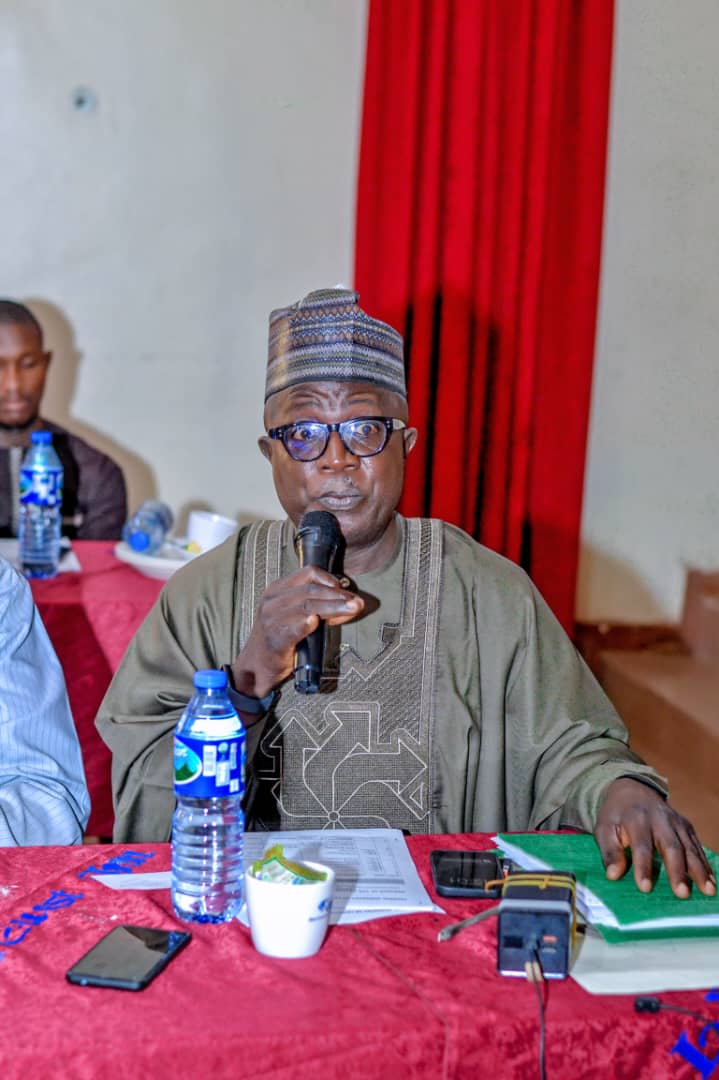
Anzaku, CVON, Federal Ministry of Livestock Development, stated this on Saturday at the maiden meeting of the National Livestock Development Committee (NLDC) in Akwanga, Nasarawa State.
It would be reported that the maiden meeting was organised by the office of the Chief Veterinary Officer of Nigeria in collaboration with Propcom+.
Anzaku, who is also the Chairman, NLDC, stressed the importance of livestock to national development and assured of the ministry’s commitment to ensuring that good memoranda are recommended to the National Council on Livestock Development for approval.
According to him, the NLDC is a technical committee that advises the National Council on Livestock Development.
“This committee is not new. It has existed and has served the livestock sector over the years. What is new is the institutional context in which we now meet.
“This is our first meeting since the creation of the Federal Ministry of Livestock Development, carved out of the Federal Ministry of Agriculture and Food Security, and dedicated specifically to livestock.
“That is a significant development, and it changes the standing of this committee. Livestock now has its own institutional home, its own policy direction and its own seat at the table of national economic planning,” he said.
Anzaku informed the committee members that the National Council on Livestock Development would meet in Lagos on Nov. 25 and 26 to decide on the recommendations and approval of memoranda.
“Four days from now, whatever we approve today must be in a form that can be carried into that meeting, defended before the Council and acted upon by state governments afterwards.
“We are meeting for one day only, so there is no room to defer decisions to a second session. The memoranda before us will be decided this week, or they will be decided without us,” he said.
The chief veterinary officer urged the participants to be technically rigorous and interrogate the evidence.
“Let us be procedurally disciplined. We have a substantive agenda. Let us keep to the memoranda and resist reopening settled matters.
“Let us be constructive where we disagree. Disagreement is useful; obstructiveness is not. Where we cannot agree, let us agree on the point of contention and put it clearly to the Council rather than bury it,” he advised.
Anzaku said that the quality of what emerges from the meeting would shape the technical foundation of the council’s decisions next week.
He also urged them to hold every submission to a clear standard, adding that four questions should govern the fate of each memorandum.
“First, is the diagnosis sound? Does it rest on evidence we can stand behind — surveillance data, laboratory confirmation, verifiable figures — or on assertion?.
“Second, is the recommendation specific? A recommendation that says ‘government should strengthen surveillance’ is not a recommendation.
It is a sentiment. We need to know who does what, with what resources, by when, and how progress will be measured.
“Third, is it implementable at the level where it will actually be implemented? If a recommendation cannot be carried out by a Director of Veterinary Services with the authority and resources that office actually holds, we should say so now rather than discover it after the Council has adopted it.
“Fourth, is it affordable and financed? A recommendation with no funding line is a recommendation that has already failed.
“If a submission meets those four tests, we should approve it, and approve it enthusiastically. If it does not, our obligation is to strengthen it, not merely to pass it. This is a technical committee. Our value to the Council lies in the quality of our judgement, not the speed of our agreement,” he said.
Anzaku called on directors of veterinary services to contribute meaningfully during the meeting for livestock development in their states.
“To the directors of veterinary services in particular: you are not here as observers of a federal process. You are the members of this committee, and the states are where animal health is delivered.
“An outbreak is reported in your state. A vaccine is administered in your state. A sample is collected, or not collected, in your state. The technical strength of this committee is the sum of what each of you brings into it,” he said.
The chief veterinary officer appreciated partners, Propcom+ and other institutions for supporting the activities of the ministry to succeed.
“Our expectation is clear: external support is most valuable when it strengthens our own institutional capacity and leaves something standing behind it,” he said.
In their goodwill messages, Dr Dashe Yakubu, Executive Director, National Veterinary Research Institute (NVRI); Prof. Mathew Adamu, National President, Veterinary Council of Nigeria (VCN); Prof. Udo Herbert, Registrar, Nigerian Institute of Animal Science (NIAS); Dr Abdullahi Musa,
Director, Veterinary Services, Ministry of Livestock Development, Nasarawa State; and Dr Ombugu Kuje Ayuba, Chairman, Nigerian Association of Animal Health and Husbandry Technology (NAAHHT), commended the ministry for organising the meeting.
They said that the committee meeting marks a bold step toward transforming Nigeria’s livestock sector into a modern, peaceful, and economically vibrant engine for national food security and job creation.
They further assured of effective partnership, to share experiences and strengthen professional relationships that would boost livestock production in the country.
On her part, Dr Adiya Ode, Country Representative of Propcom+, assured the organisation’s continued support for livestock development and congratulated the CVON and the ministry for their commitment to the sector.
It would also be reportef that the meeting featured presentation of different memoranda for submission to the National Council on Livestock Development.