By Sumaila Ogbaje/Stephen Benjamin
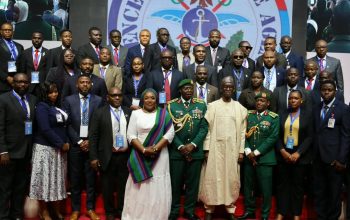
The National Festival of Tolerance and Peaceful Coexistence Programme has advocated the early teaching of lawful tolerance to Nigerian children to promote national unity and peaceful coexistence.
The National Coordinator of the programme, Ijeoma Akwara, made the call on Monday at an event to commemorate the 2026 International Day for Tolerance at Model Primary School, Apo Legislative Quarters, Abuja.
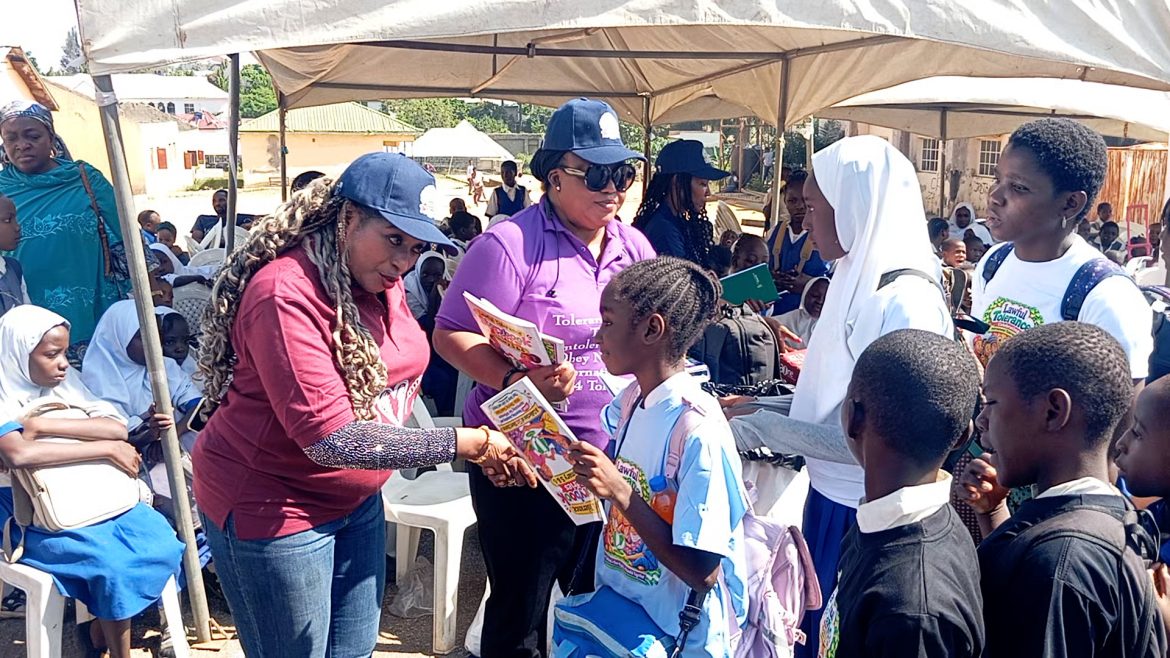
The event, themed “Lawful Tolerance”, featured the distribution of the second edition of the Lawful Tolerance storybook to pupils in Primary 5 and 6.
Akwara said the initiative was designed to educate children on the importance of respecting cultural, religious and ethnic differences while upholding the rule of law.
She explained that Nigeria, as a member state of UNESCO and a signatory to the 1995 Declaration of Principles on Tolerance, had a responsibility to promote mutual understanding and peaceful coexistence among its diverse population.
According to her, the declaration encourages people of different ethnicities, ideologies, religions and social backgrounds to accept their differences and live together peacefully.
“Lawful tolerance is just saying the same thing. It is a simple concept that makes you understand that tolerance is not oppression, but love for culture, which means respecting, appreciating and understanding each other within the boundaries of the law,” she said.
Akwara said the school initiative was one of about six components of the National Festival of Tolerance and Peaceful Coexistence Programme.
She explained that the component, known as “Adapted School: Read to Me Today”, involved adopting schools and educating pupils on values such as tolerance, mutual respect and peaceful coexistence.
“We started with schools because we believe that it is important for our children to celebrate a wonderful ideology, which is the ability to be each other’s neighbour, irrespective of tribe, religion or status.
“We want to catch them young. They are all from different places and go back to different homes. It is important that the children are carried along while we prepare for the adults,” she said.
The coordinator said the programme would also organise an academic symposium in December to examine ways of promoting lawful tolerance, from the classroom to the wider society.
She called on individuals and organisations to support the initiative by adopting schools and ensuring that every child had access to a copy of the storybook.
Earlier, Mr Ojo Michael, representing the Nigerian National Commission for UNESCO (NACOM-UNESCO), said the International Day for Tolerance was established in 1995 to address divisions arising from differences in religion, language, culture and other aspects of human identity.
He said the annual commemoration was aimed at encouraging people across nations and communities to recognise their shared humanity and embrace peaceful coexistence despite their differences.
Ojo said the choice of the school for the event was deliberate, given its diverse population of pupils from different states, ethnic groups and religious backgrounds.
“When you see any school in this country, it constitutes Nigerians. They are not all from the same state or religion. They come from the East, West, North and South,” he said.
He said educating children on tolerance would help them become ambassadors of peace and contribute to building a more united Nigeria.
“We are doing this in order to preach peace into the lives of our children, who are the greater tomorrow, so that they can learn to live in peace and become peace ambassadors in our country,” he said.
Ojo also urged political leaders to demonstrate commitment to peaceful coexistence by fulfilling promises made to Nigerians during election campaigns.
He stressed that promoting peace required commitment from both citizens and political leaders entrusted with the responsibility of governance. (NAN)