By Sumaila Ogbaje
The National Counter Terrorism Centre (NCTC), Office of the National Security Adviser (ONSA), has partnered the United Kingdom National Crime Agency (UK-NCA) to deepen intelligence-led collaboration against kidnapping and organised crime.
This is contained in a statement by the Head of Strategic Communication at NCTC, Mr Michael Abu, on Thursday in Abuja.
Speaking on behalf of the National Security Adviser, Malam Nuhu Ribadu, the National Coordinator of NCTC, Maj.-Gen. Adamu Laka, described kidnapping as one of Nigeria’s most pressing security challenges.
Laka, represented by the Director of Intelligence, Brig.-Gen. Peter Gbor, said criminal groups had become more sophisticated by exploiting technology and operating across multiple jurisdictions.
He said the evolving threat required sustained intelligence sharing, stronger inter-agency cooperation and coordinated operational responses.
According to him, the Multi-Agency Anti-Kidnap Fusion Cell has improved intelligence integration, operational coordination, geospatial analysis and information sharing among security agencies.
He said the platform had contributed to disrupting kidnapping networks, improving investigations and supporting successful rescue operations.
Laka urged participants to use the meeting to identify operational gaps, harmonise procedures and strengthen investigation and prosecution processes.
He said practical recommendations from the meeting would further enhance Nigeria’s capacity to prevent kidnapping and protect citizens.
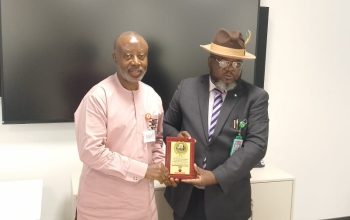
The UK National Crime Agency’s International Liaison Officer, Mr Matt Mountain, reaffirmed Britain’s commitment to supporting Nigeria’s fight against serious and organised crime.
Mountain commended Nigerian security agencies for their professionalism and resilience despite increasingly complex operational challenges.
He said effective kidnap response begins at the state level where intelligence is first generated and operational decisions are taken.
According to him, stronger links between state commands and the Multi-Agency Anti-Kidnap Fusion Cell will improve intelligence sharing, operational coordination, victim support and successful prosecution of offenders.
He reaffirmed the UK’s commitment to supporting Nigerian-led initiatives through capacity building, professional exchanges and practical cooperation.
Earlier, Gbor said kidnapping had become a major public safety concern and a significant source of funding for terrorist and organised criminal groups.
He said the Fusion Cell, operationalised in December 2024, had become a critical platform for integrating intelligence and supporting security agencies with advanced technical capabilities.
According to him, participants will undergo intensive kidnap management training based on the United Nations Kidnap Manual while reviewing the Fusion Cell’s Standard Operating Procedures and Terms of Reference to improve nationwide operational effectiveness.
The Initiative is through the Second Edition of the Multi-Agency Anti-Kidnap Fusion Cell (MAAKFC) State Expansion Programme and Stakeholders’ Meeting holding in Abuja from July 6 to July 10.
The programme brings together security, intelligence and law enforcement agencies, relevant Ministries, Departments and Agencies (MDAs), and international partners, including the British High Commission. (NAN)